






The Wedding Planner Website That Books the Date
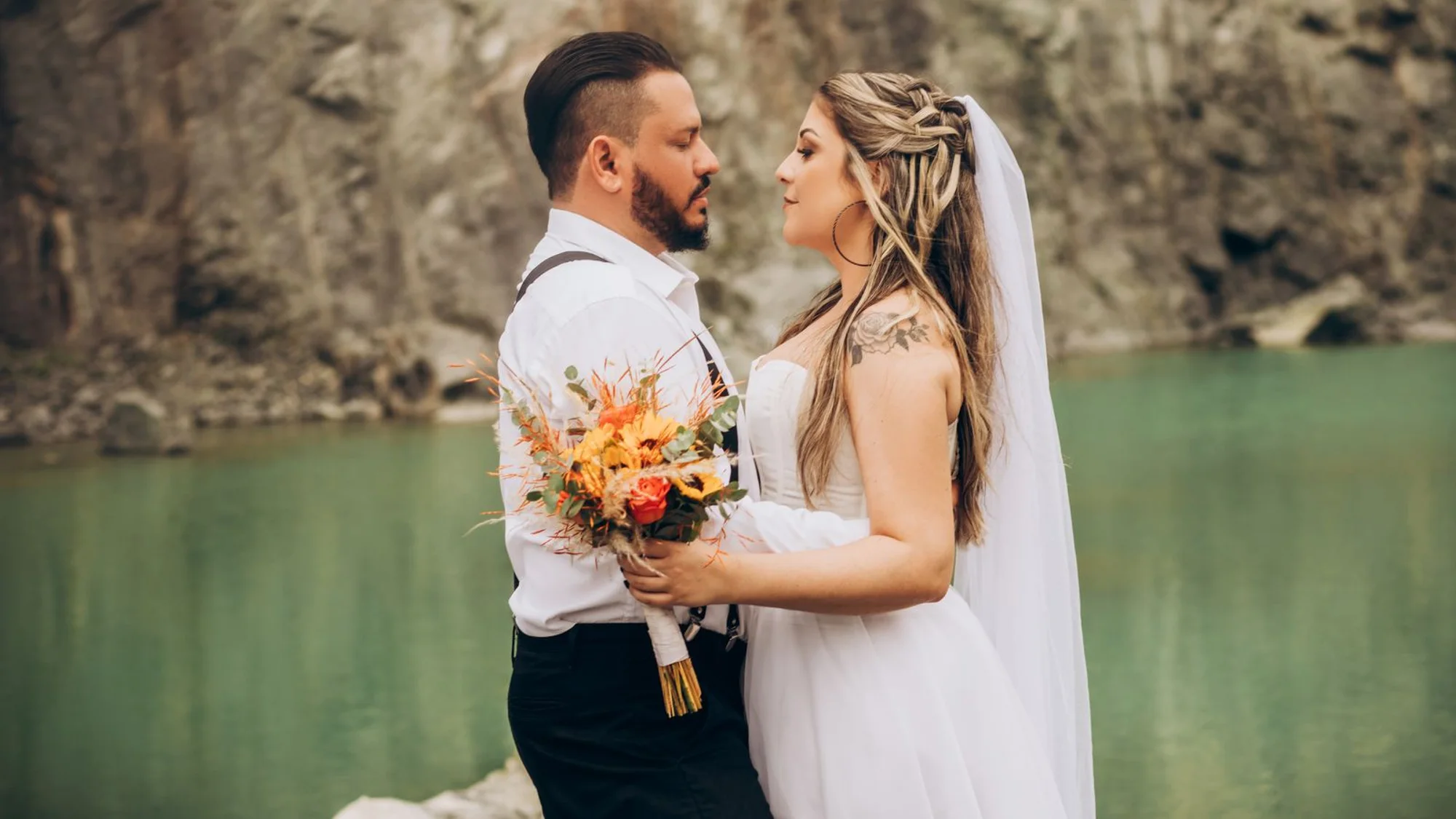
Picture the most common way your work begins. A couple has just got engaged, the excitement is high, and the first practical move is almost always the same: reach for a phone and look for someone to turn a vague idea of “a wedding by the lake” into a real day. They type “wedding planner Lugano,” or “wedding planning Ticino,” and within seconds a handful of names appears. They open three or four tabs, scroll through photos of other weddings, and try to work out who these people are and whether they would be in good hands. Within a couple of minutes, without saying it out loud, they have already decided who to write to first. The planner with a warm, polished site full of real events earns that first email; the one with a slow, generic page, or an old catalogue of services frozen in time, loses them before the photos have even finished loading.
A wedding planner website is how you make sure that couple lands with you and not the colleague whose profile they saw right after. Not a brochure that has sat untouched for two seasons, and not a single social profile you do not control, but a proper site of your own: somewhere a couple dreaming of their day can read your style, where a whole event is told from first sketch to last dance, where a company that needs to run a conference can see you handle that too, and where a consultation request lands straight in your inbox. This guide is about what that site actually needs to do, what turns an excited couple into a booked consultation, and why - in Ticino, across Switzerland and for everyone eyeing the lake from afar - the planners keeping their calendars full are the ones who treat their site as a working tool rather than an album to flip through.
The quiet question every couple asks
Here is what most wedding planner sites get wrong. They lead with a list of services - “coordination, styling, catering, venues, photographer” - as if the couple’s first concern were to tick a box. It is not. The first question, sitting unspoken behind almost every enquiry, is closer to this:
Will this person understand how we imagine our day, and can we trust them to hold it?
For most couples, planning a wedding is the most expensive and most emotionally loaded thing they will do together before buying a home. They are not buying a service; they are handing a stranger one of the most important days of their lives, knowing there is no second chance to get it right. That trust is the biggest thing standing between a visitor and a consultation request - bigger than price, bigger than the service list, bigger than your number of years in the business. A site that builds it well converts. A site that ignores it, however elegant, leaves couples stranded between two open tabs.
This changes what your homepage should do in the first few seconds. An emotion, not a menu. A warm photograph of a real moment - a bride laughing, guests raising a toast at sunset over the lake - says more than any bullet list. Your face matters too: couples hand their day to a person, not a logo, and seeing who you are, hearing your voice in a few well-written lines, closes the distance before they ever write. Organising competence matters, and we will get there, but it lands far better once the couple already feels understood. Emotion and trust first, logistics second. Most sites have that order reversed.
Why Instagram alone is not enough
Plenty of planners tell us the same thing: “My Instagram does great, I have thousands of followers, and nearly all my weddings come from there - do I really need a site?”. Fair question, and the answer is yes, for reasons that have nothing to do with effort and everything to do with where a decision is actually made.
Instagram is brilliant at one thing, and it is the right one at the top of the journey: making someone fall for your style. A shot of a setting under the lights, a clip of the first dance, the detail of a beautifully laid table - all of it stops the right person mid-scroll and makes them want exactly what you do. Use it; it earns every minute you spend on it. But know what it cannot do. A feed is a river: your best post has already drifted away by the weekend, you are at the mercy of what the algorithm feels like showing, and no one, looking at a grid of little squares, can work out how a whole day with you actually unfolds from start to finish. Worse, it is not yours. The platform owns your audience, decides who sees what, and could change the rules tomorrow morning, taking with it the following you built over years.
There is a more concrete limit too. A couple ready to commit needs to see things a feed does not hold: an event told in full, from first sketches to the cutting of the cake; your packages, so they can tell whether you sit in their world; your way of working, step by step, so they can picture the months ahead of them; a simple, direct way to tell you their date and ask if you are free. None of that lives well on social. Treat Instagram as the lit shop window that stops the passer-by on the street: its whole job is to bring the right person inside. The shop - the place where the couple sits down, takes it all in calmly and decides - is your site, and it is the only part you truly hold the keys to.
Of your whole online presence, one thing answers to you and no one else: your site. The words an excited couple meets, the photo at the top, the order in which you tell your events, the exact moment the invitation to book a consultation appears - you decide all of it, and none of it is borrowed. It keeps working while you are on site coordinating an event until midnight, and while a couple across the border, or across Europe, plans their lakeside wedding a time zone away. And above all, every enquiry it brings comes straight to you, with no toll, no per-lead fee, and no algorithm deciding whether couples ever find you at all.
What belongs on a wedding planner website
A site like this lives or dies on two things: how much a couple can trust you by looking at it, and how easy it is, once they are convinced, to take the step of writing to you. Everything else supports those two. Here is what earns a place, roughly in the order a visitor meets it.
A portfolio of real events, told in full
This is the most important part of the whole site, and the part most planners treat as a simple heap of pretty images. A portfolio is not a gallery: it is proof you can run a whole day, and it should be built that way. Each event deserves to be told as a small story - where it was held, what the couple imagined, how you solved the problem no one sees, how it ended. A few lines beside the photos turn a display into a demonstration: the couple is no longer just looking at a beautiful setting, they understand there is a mind behind it that coordinated venue, suppliers, timing and surprises so the day ran smoothly.
Mind the geography too. If you have run weddings in Lugano, in Morcote, at a villa overlooking the lake, say so clearly: a couple dreaming of exactly that place wants to see you have worked there, and search engines read those same names when someone looks for “weddings on Lake Lugano.” Mix the scales: the intimate wedding of thirty and the party of two hundred tell different stories and speak to different couples. A rich, varied portfolio answers the question every couple asks in silence - “can they handle exactly what we want?” - without your having to say it in words.
Galleries that can breathe
Photos are your raw material, and they deserve the same respect with which you had them taken. Large images, filling the screen, opening without a wait, arranged so a couple can live an event as a sequence rather than a jumbled pile. The difference between a gallery that loads fast and moves people and a wall of slow, compressed thumbnails is the difference between a couple who stays to dream and one who closes the tab. In this trade the images make the sale more than any words: give them room, do not bury them.
The service pages: weddings, corporate events, destination
A serious event planner rarely does just one thing, and the site should show it with order. Weddings are the heart, but corporate events - conferences, gala dinners, product launches, team building by the lake - are often the revenue that steadies the year, and they speak to a completely different audience, one looking for reliability and organisation more than romance. They deserve a page of their own, in a fitting tone. Destination weddings are a third world again: a couple arriving from Zurich, Milan or London to marry by the lake needs specific reassurance - the language, the logistics of travelling guests, the permits, the trusted local suppliers. A page that addresses exactly those fears turns a distant dream into a concrete enquiry.
Write these pages first for the person reading them, with their real concerns; the ranking benefit follows, because they are exactly the pages that make you appear when someone searches “destination wedding Switzerland” or “corporate event planning Ticino” rather than only your name.
The packages, explained honestly
Budget is the second big unspoken question after trust, and most sites dodge it entirely. It is true that every wedding is different and that a price fixed to the last franc makes no sense in this work - but total silence does not protect your margins, it merely pushes the cautious couple toward the colleague who at least hints where they sit. Present your packages clearly: day-of coordination only, full planning from A to Z, the middle formula. You do not need a rigid price list; you need to give the couple a sense of where you sit and what each formula includes, so that whoever writes is already closer to your world. An indicative range, presented with tact, filters out the wrong enquiries and draws in the right ones.
The process, step by step
Planning a wedding frightens couples precisely because they do not know what to expect: how long it will take, how many decisions they will have to make, how much weight will stay on their shoulders. A page that tells your process - the first consultation, defining the vision, selecting suppliers, coordinating over the months, directing the day itself - dismantles that fear better than any promise. It shows the couple there is a method, that someone will hold the threads for them, that they can enjoy being engaged rather than drowning in a to-do list. It costs little to write and speaks directly to the most uncertain couples, the ones who without this reassurance would put off the first step.
The consultation request
At the end of every path there should be one simple, clear gesture: tell me about your day. A well-made consultation request gives the couple room to say what really matters - the date, the place or area they dream of, an indicative guest count, a line about what they picture - and hands you a qualified contact, with a name and a context, sitting in your inbox. That single feature does something powerful: it turns a vague “I wonder if we would be in her world” into a conversation already begun. It is the point where all the site’s work - the trust, the portfolio, the packages - becomes an event you could actually run.
If you would rather see all of this assembled in a working site than read it in a list, we have built a full demo you can click through: see the live demo. It is a fictional planner, but every flow - the told portfolio, the service pages, the packages, the process, the consultation request - is real and working.
Making the wedding planner website convert
Having the right pages is necessary. It is not enough. The distance between a site that looks good and a site that fills the calendar comes down to a handful of unglamorous details.
Speed and mobile come before everything. The couple who just got engaged searches on a phone, in the evening, on the sofa, in a few minutes stolen from the excitement. If your homepage keeps them waiting while a theme weighed down by unoptimised galleries drags itself onto the screen, you have lost them around the second or third second, long before your best photo has finished appearing. A wedding planner site is made of images, and images are heavy: loading them fast and well on a small screen is not a finish to add later, it is the thing that decides whether the couple stays to dream or not.
Make the consultation request the obvious next step, everywhere. A persistent invitation to tell you about their day, following the visitor down the page, repeated at the foot of every portfolio event and every service page. Not five competing calls to action - one, clear, available the moment the couple is ready, moved after seeing your work. The effort of hunting for how to contact you loses enquiries; a single obvious step wins them.
Response speed closes it. The site can hand you the enquiry the instant it is made; what happens next is on you. A couple who gets a warm reply within a few hours feels cared for before the first meeting. Leave the same message until next week and you are often replying to someone who has meanwhile booked a consultation with whoever answered first. The excitement of an engagement does not wait, and neither does the choice of planner. Treat that inbox the way you would treat an important phone call: at once, and with warmth.
Reassurance sits beside the action. A line like “tell us about your day, no obligation - the first meeting is just to get to know each other” placed right beside the form measurably raises how many couples actually fill it in. Your face near the request, a word from a happy couple, a simple note on what happens at the first meeting - these are the things that give someone who hesitates permission to take the first step.
Cut friction in the form itself. Every extra field is a small reason to put it off, and an excited couple puts things off easily. Ask for the minimum you need to reply sensibly - name, contact, an approximate date, place, two lines about what they picture - and go deeper at the first meeting. The goal at this stage is a conversation that begins, not a full brief.
Testimonials deserve a separate mention, because in this trade they weigh in a specific way. A couple is about to hand you an unrepeatable day: the words of another couple who has already done it and come out happy are worth more than anything you can say about yourself. A real review - the name, the date, perhaps a photo of their day - beside the portfolio is the most powerful social proof the site can carry. Gather those words right after each event, while the emotion is still fresh, and give them a place of honour.
Organic versus paid: where the enquiries really come from
Sooner or later the question becomes “but how do people find the site at all?”. There are two answers, they run on completely different clocks, and a sensible planner uses both - but not in equal measure and not in the wrong order.
Organic traffic is what you earn from search and your reputation - couples typing “wedding planner Lugano,” “wedding planning Ticino,” or your name directly. Local search is the foundation for an event planner, and it leans heavily on a fast site, a portfolio rich in real, place-named events, clean service pages and a steady stream of genuine reviews. It is slow to build - a new site does not rank overnight - but it is the best value in marketing, because once it works it keeps working, couples arrive already charmed by your work, and you pay nothing per contact. A planner with a year of solid local presence has built a quiet asset that brings enquiries on its own.
Paid traffic is the mirror image: instant, and rented. It has its place, especially when you are starting out and organic has not yet loaded, or when you want to catch the high-value destination weddings - a couple searching “wedding on Lake Lugano” from abroad is a contact that quickly repays the cost of a click. Meta - Instagram and Facebook - earns its place for letting your style be discovered by people not yet looking for you, with a beautiful setting that stops the right person mid-scroll. The discipline is the same everywhere: couples stop arriving the moment you stop paying, so send every click somewhere that converts - a fast page, a portfolio that convinces, a simple consultation request.
The sensible order for most planners is clear. Build the site properly first, because every paid click lands on it and a fast, moving page is what turns a click into a booked consultation. Then, if needed, run targeted campaigns - on high-value destination weddings, or to be discovered while you are starting out - while your local organic presence grows underneath. Over a year the spend can ease as organic carries more of the enquiries. Paid buys you a couple today. Organic and reputation buy you couples every tomorrow.
Ready-made or built from scratch?
So the site matters - the last real decision is how to get one. For most planners the traditional custom route is the wrong default, and here is the honest reasoning.
A custom build is a months-long project with a five-figure invoice, in which you pay someone to reinvent a portfolio, galleries, service pages and a consultation form that have been built a thousand times over. You carry the project risk, the launch date slips - often right into the season you needed it most - and the clever parts, the curated galleries, the corporate and destination pages, the well-thought-out consultation form, are exactly the pieces cut when the budget runs out. In the end you own code you now have to maintain, update and keep secure forever. There are businesses for which a fully custom project is the right call - large operations with genuinely unusual needs. Most are not.
There is a second route, and for most planners it is the better one: start from a wedding planner website that already exists. Ours was built once, then refined continually against how real event planners actually use it - so the hard questions about what works are already answered before your name goes on it, and the wait is measured in days rather than seasons. The terms are deliberately simple: a reasonable one-time setup, then a fixed monthly fee that rolls hosting, maintenance, security and the small ongoing changes into a single figure - and not a franc of commission on the consultations it brings. It stays entirely yours to shape: your brand, your colours, your events, your tone, with bespoke additions later if you grow into it. Starting from something proven does not box you in; it just means you are already taking consultation requests while a custom project would still be at the wireframes.
That is exactly the model behind our ready-made wedding and event planner website - one of a whole line of ready-made sites built for specific industries. You get the site a custom project would have delivered, without the months and without the five-figure risk, and you can be taking consultation requests next week rather than next quarter.
Where to start
If you take one thing from all this, hold two together: build trust, and make the first step easy. Open with emotion and your face, so a couple feels at once they are in the right place; tell your events in full, so they understand you can run a real day; then put a clear, gentle invitation to tell you about their day everywhere, so someone moved by your work does not have to hunt for how to say so. A warm, fast site a couple trusts on sight; a portfolio that is a demonstration, not a display; a reply that goes out within a few hours, with warmth. Put those together and the enquiries arrive quietly while you do what you do best: orchestrate days people will remember forever.
None of this is the obstacle it once was. There was a time when simply having a polished, working site was a long and costly project in itself; that time has passed. The site exists, it does its job, and it can carry your name and take your first consultation requests within a week.
Frequently asked questions
- How much does a wedding planner website cost?
- A custom build for a business like this easily runs into five figures and takes months before it brings a single enquiry. A ready-made, productised site like ours is a one-time setup plus a low all-inclusive monthly fee that covers hosting, maintenance, security and small changes - the current figure is on the solution page. There is never a commission on the consultations or events the site books for you.
- I have thousands of followers on Instagram. Do I still need a website?
- Yes, and it does a different job. Instagram makes a couple fall for your style, but a feed scrolls away and holds no one. The site is where that spark becomes a consultation request with a name, a date and a budget - and where a couple planning at eleven at night understands how you work, sees whole events rather than scattered shots, and writes to you. Social earns you attention; the site turns it into a booked event.
- How long before it is online?
- A ready-made wedding planner site goes live in a few working days. We set up your brand, colours, a portfolio of real events, your packages and your process, connect the consultation request, and it is live. A bespoke project is usually a two to four month commitment, and the very parts that matter - the curated galleries, the service pages, the consultation form - are exactly what slips when the budget tightens.
- Will it help me show up on Google for 'wedding planner Lugano'?
- Local search is the base for an event planner, and it rewards a fast, well-structured, multilingual site with clean service pages and a portfolio rich in real, place-named events. No site can promise the top spot, but the planners who appear for 'wedding planner Ticino' or 'weddings on Lake Lugano' are the ones whose site is technically sound and answers what couples actually search for.
- Can couples request a consultation straight from the site?
- Yes. Every page can lead to a consultation request, and a dedicated form lets a couple tell you the date, the place, the guest count and what they picture, and hear back from you - no per-lead fee, no middleman. That consultation request, alongside a portfolio that convinces, is usually the most valuable thing on the whole site.