










The Photographer Website That Brings Clients In

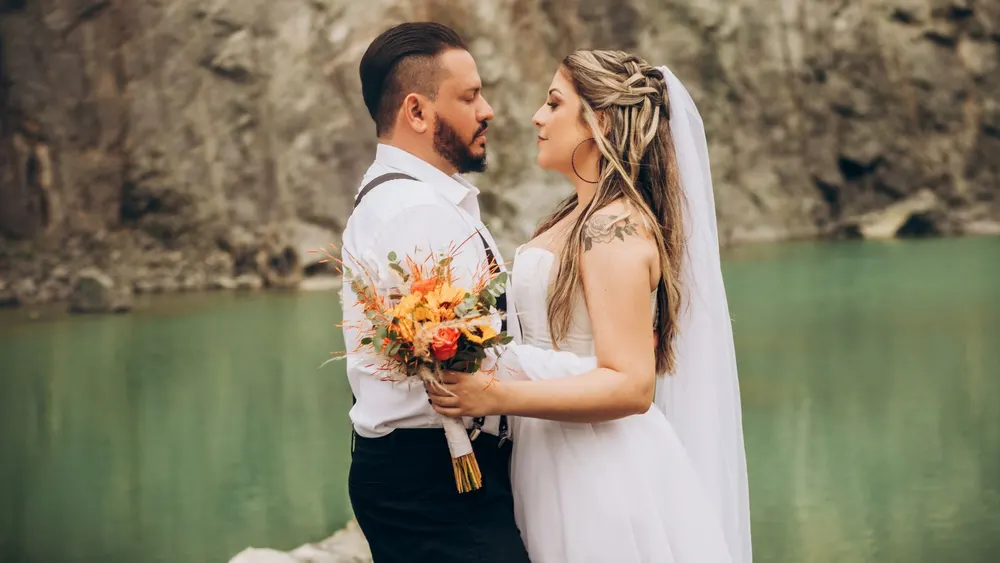
Picture the most common way a new client finds you. A couple has just set their wedding date, and that same evening one of them reaches for their phone and types “wedding photographer Lugano.” Up come a few ads, a scatter of names, then social profiles and directories. They tap the first photographer whose work actually stops them - a frame that makes them think this is exactly what I want for our day - and immediately look for a way to learn what it costs and whether you are free that date. Whoever handles that moment well wins a commission worth several thousand francs and, often, the word of mouth that follows. The photographer with a fast site that shows the work full-size wins; the one with a slow page, or nothing but a feed to scroll, loses them before a single image has finished loading.
A photographer website is how you make sure that client lands with you and not the peer down the road. Not a brochure untouched since 2019, and not a single profile on a platform you do not control, but a proper portfolio of your own: somewhere a prospective client can see your eye full-screen, understand what you offer and in what style, and ask you for a quote with the date already in hand. This guide is about what that site actually needs to do, what turns a curious visitor into an enquiry, and why - across Switzerland and Italy - the photographers and videographers who work steadily are the ones who treat their site as a working tool rather than a digital business card.
On a photographer’s site, the work is the pitch
Here is what most photographers get backwards. They build the site to explain their philosophy. Up top there is a poetic line about emotion and light, a black-and-white self-portrait, a paragraph about how they “capture authentic moments,” and somewhere further down, at the very end, a grid of shrunken thumbnails. It is the wrong order. Nobody books a photographer because of a manifesto. They book because they looked at a finished frame and thought, silently: I want that too.
In this trade the work is what convinces. Everything else is trim. A prospective client cannot judge your sensibility or your eye from words - they judge it from the photograph of an embrace caught at the right instant, from a portrait in which the person finally looks like themselves, from a wedding film that gives them goosebumps ten seconds in. The site’s only job is to put that work in front of their eyes, full-size and fast, and then get out of the way.
So the deciding question a photography site has to answer is not “is this person good with words?” It is closer to: does this person see the world the way I want my day to be seen, and can I trust them to deliver it? That question is answered by the portfolio first, and only then by the text. A photographer who opens with twelve strong shoots, organised so that a bride quickly finds other weddings and a company quickly finds other corporate portraits, has already won half the battle before a word is read. A photographer who opens with a wall of text and three thumbnails has lost a visitor who, thirty seconds earlier, was a possible client.
Why an Instagram feed is not enough
Plenty of photographers and videographers tell us the same thing: “I have a good Instagram, I post on TikTok, brides tag me - isn’t that enough?” It is a reasonable thought, and the answer is no. Not for want of effort, but because of ownership and intent.
Social is good at one narrow thing: putting your work into a stream people scroll. Use it. A good feed keeps you visible, a well-cut wedding Reel gets you discovered by people who did not know you, and bride tags are free word of mouth. But understand the trade. You are in a feed next to thousands of others, the algorithm decides who sees you and in what order, your images get compressed and cropped into a square or a vertical that rarely flatters the composition, and a project drops out of sight within a day. A viral post has never on its own made anyone sign a wedding contract. Social tells someone you exist. It does not put them in a position to choose you.
There is a trap specific to this trade: on social, your best work is indistinguishable from anyone else’s with a good eye and a good phone. The same square grid, the same crop, the same editing trends. That is exactly where what makes you choosable gets lost - a shoot’s sequence told the way you meant it, a portrait breathing full-screen, a diptych pairing two frames the way you composed them. Treat the feed as a taste, not the destination. Its only job is to send a curious scroller somewhere they can see the work as it deserves to be seen - and that somewhere is a portfolio you actually hold the keys to.
Of that whole list, one thing answers to you and no one else: your site. How the portfolio flows, how fast it loads, which frames a client meets first, how it is laid out, the exact moment the enquiry button appears - all of it is yours to decide, and none of it is on loan. It keeps working while you are on a shoot with your phone in your bag: at eleven at night, when a couple decides who to contact about their wedding, the site is awake too. And crucially, nothing it brings gets taxed on the way to you - the enquiry, the date, the budget arrive straight in your inbox, with no commission withheld, no per-lead toll, and no feed deciding whether your clients ever find you at all.
What belongs on a photographer website
A photography site lives or dies on two things: how it shows the work and how easy it makes the next step. Everything else earns its place against those two. Here is what matters, roughly in the order a visitor meets it.
A filterable portfolio, organised the way clients think
This is the core feature, and the one most sites get wrong. Clients do not think by year or by project name - they think by their own need. A bride wants to see other weddings. A marketing director wants to see other corporate portraits and product shoots. A private client giving a session as a gift wants to see other family portraits. A well-built portfolio lets you filter by category in one tap - wedding, portrait, corporate, product, events - so each person reaches what resembles their own case fast, without scrolling past everything else.
Within each category, the individual frame has to be able to breathe. A real lightbox - the photo opening full-screen with a click, arrowed through, no page reload - is the difference between a portfolio that gets studied and one that gets abandoned. It is how your work is seen the way you would see it printed: large, sharp, one at a time. And for the videographer the same principle applies, with a featured film per category that starts clean and does not make anyone wait.
Service pages that explain what they are actually buying
A bare list - “weddings, portraits, business, events” - tells a client nothing they did not already know. The services that bring real revenue, and real hesitation, each deserve a proper page. What a wedding package covers: how many hours of coverage, whether there is a second shooter, how many images delivered, in what timeframe, in what form - online gallery, prints, album. How a corporate shoot runs, what to expect from a half-day of team portraits, how you handle a product shoot for an online store. These pages do double duty. They reassure the half-decided client, and they are exactly what search engines use to put you in front of someone typing “wedding photographer” or “corporate photography” rather than just “photographer.” Write them for the person who has to decide first; the ranking benefit follows.
If your clients are partly international - and across Switzerland and northern Italy many are - multilingual service pages stop being a nicety. A foreign couple marrying on Lake Como or in Lugano wants to read packages and terms in their own language before they trust you with the one day that does not come round again.
Packages and a sense of price
Money is the big unspoken question, and most photography sites dodge it entirely. We understand why: you fear scaring people off, or tying yourself to a figure. But a client left completely in the dark does not write to ask - they go to whoever at least gives them a reference point. You do not need a price list to the last franc. You need an honest anchor: named packages, what each includes, and a “from” band that filters out those who are not a fit and reassures those who are. Someone weighing a wedding worth several thousand francs wants to know they are in the right place before they invest the time to write. A sense of price, well presented, does that job and brings you more qualified enquiries.
An about page and your approach
Here, and only here, the text earns its space. Once the work has convinced, the client wants to know who is behind it - because a wedding, a portrait, a day that does not repeat are entrusted to a person, not a logo. A real about page, with your face, an honest photo of you at work, and a few lines on how you work the day itself, does something no gallery can: it makes the relationship human before the first meeting. Tell them how you put at ease the people who hate being photographed, how you move through a wedding day, what you actually care about. This is the part that turns “I like their photos” into “I want them specifically.”
The quote and availability request
If you force me to name the single most valuable page on the whole site, it is not the gallery, however beautiful. It is the quote and availability request. It is the point where a curious scroller becomes a named lead with a date and a budget, sitting in your inbox. And in photography it has one detail that changes everything: the date. A form that asks for event date, location and service type hands you, in one move, the single piece of information that decides whether you can take the job - and spares you the half-dozen emails that exist only to establish whether you are free. Keep it short. Date, location, service type, contact, two free lines: that is enough. Every extra field is a small reason to abandon it, and your goal at this stage is a client who steps forward, not a complete brief.
If you would rather see all of this assembled into a working site than read about it in a list, we built a full clickable demo: see the live demo. It is a fictional photographer, but every flow - filterable portfolio, lightbox, service pages, packages, availability request - is real and working.
Making the photographer website convert
Having the right pages is necessary. It is not enough. The distance between a site that looks good and a site that brings the commissions in comes down to a handful of unglamorous details - and in photography the first of all is technical.
Speed is your number-one problem, precisely because your work is images. It is the paradox of the trade: the photos that make people choose you are also the thing that can sink the site. A portfolio full of huge, unoptimised files drags on a phone screen, and a client waiting while a gallery loads in fits leaves around the second or third second - long before your best frame has appeared. The fix is not fewer photos, it is serving them properly: modern formats, sizes matched to the screen, progressive loading so the page is usable at once. This is exactly the kind of thing a plugin-stuffed site gets wrong, and a properly built site solves without you having to think about it. Beautiful images served slowly do not convert; beautiful images served fast do.
Make the enquiry the obvious next step, everywhere. A “Check availability” or “Request a quote” button that follows the visitor down the page, repeated at the foot of every service and every category page. Not five competing calls to action - one, clear, available the moment the client is ready. Decision fatigue loses enquiries; a single obvious step wins them.
Response speed closes the deal. The site hands you the enquiry the instant it is made; what happens next is on you. In photography this weighs double, because dates are unique: a couple writing to three photographers for the same Saturday goes with whoever replies first, warmly, with availability confirmed. Leave the same message until tomorrow and you are often replying to someone who has already booked elsewhere. Wire every form so it lands in front of you at once, and manage that inbox the way you would an important call.
Show proof that can be seen. In this trade the proof is partly visual and partly human. A bride’s review - “she put us at ease without us even noticing” - next to a wedding shoot is worth more than ten adjectives about yourself. The logos of the companies you have shot for, on a corporate page, tell a marketing director you are a safe choice. And a few behind-the-scenes frames, the “how I work,” reassure people who fear the camera: they see a person, not a lens pointed at them.
Mind the details that say “professional.” A well-delivered online gallery, a domain of your own instead of a profile on someone else’s platform, a page as comfortable on a phone screen as on a laptop - these are the things that, added up, separate an amateur with a good eye from a professional you would trust with an important day without hesitating. They are not glamorous, and no client names them. But they are what tips the decision when two photographers have work that is equally good.
Getting found: where clients actually come from
Sooner or later the question becomes “but how do people find the site?” There are two answers, they run on completely different clocks, and a sensible photographer uses both - but not in equal measure and not in the wrong order.
Organic traffic is what you earn from search and your reputation - people typing “wedding photographer Lugano,” “corporate photography Ticino,” “portrait photographer Milan,” or your name directly after seeing you tagged. Local search is the foundation of a photographer’s marketing, and it leans heavily on a tidy Google Business Profile, genuine reviews, and a fast site with clean service pages that answer real questions. It is slow to build - a new site does not rank overnight - but it is the best value in marketing, because once it works it keeps working, clients arrive already interested, and you pay nothing per enquiry. A photographer with a year of solid local presence has built a quiet asset that brings enquiries on its own.
Paid traffic is the mirror image: immediate, and rented. This is where photography stands apart. For weddings, the economics hold: a single commission is worth enough to justify a few paid clicks, and a well-targeted campaign on “wedding photographer,” pointed at a strong service page and a clean availability request, can pay for itself many times over on one contract. Instagram and Meta earn their place for visual work - a wedding Reel can stop the right person mid-scroll and carry them to the site. But the discipline is the same everywhere: clients stop arriving the instant you stop paying, so send every click somewhere that actually converts.
The sensible order for most photographers is clear. Build the site properly first, because every paid click lands on it and a fast page with a strong portfolio is what turns a click into an enquiry. Then, if you want, run targeted campaigns on the services where the economics hold - weddings above all - while your local organic presence grows underneath. Over a year the ad spend can ease off as the organic side carries more of the work. Paid buys you a client today. Organic and reputation buy you clients every tomorrow.
Ready-made or built from scratch?
So the site matters - the last real decision is how to get one. For most photographers the traditional custom route is the wrong default, and here is the honest reasoning.
A custom build is a months-long project with a five-figure invoice, in which you pay someone to reinvent a filterable portfolio, a lightbox, service pages and an enquiry form that have been built thousands of times over. You carry the project risk, the launch date slips, and the clever parts - the category filter, the smooth lightbox, images served so the site stays fast, the multilingual pages - are precisely the pieces cut when the budget runs out. At the end you own code you now have to maintain, update and keep secure forever. There are photographers for whom a fully custom project is the right call - large studios with genuinely unusual needs. Most are not.
There is a second route, and for most it is the better one: start from a photographer website that already exists. Ours was built once, then refined continuously against how real photographers actually use it - so the hard questions about what converts are already solved before your name goes on it, the speed is already under control, and the wait is measured in days rather than seasons. The economics are deliberately simple: a reasonable one-time setup, then a fixed monthly fee that folds hosting, maintenance, security and the small ongoing changes into a single figure - and, unlike some of the platforms photographers get pushed toward, not a cent of commission on the enquiries it brings. It stays entirely yours to shape: your brand, your colours, your services, your work, with bespoke additions later if you grow into them. Starting from something proven does not box you in; it just means you are already taking enquiries while a custom project would still be at the wireframes.
That is exactly the model behind our ready-made photographer and videographer website - one of a whole line of ready-made sites built for specific trades. You get the portfolio a custom project would have delivered, without the months and without the five-figure risk, and you can be taking enquiries next week rather than next quarter.
Where to start
If you take one thing from all this, hold two together: show the work, and make the next step trivial. Open with the portfolio - filterable, full-size, fast - so someone arriving sees within seconds that your eye is the right one for their day, then put the availability request one tap from every page, so a convinced client does not have to hunt for it. A quick site a person trusts at first glance; beautiful images served fast rather than slowly; a reply that goes out warmly before the client has written to two others. Put those together and the enquiries arrive on their own while you get on with photographing.
None of this is the obstacle it once was. There was a time when simply having a fast, well-made online portfolio was a months-long project in itself; that time has passed. The site exists, it does its job, and it can carry your name and show your work within a week.
Frequently asked questions
- How much does a photographer website cost?
- A custom build runs easily into five figures and takes months, most of them spent reinventing a gallery and a contact form that have been built a thousand times over. A ready-made, productised site like ours is a one-time setup plus a low all-inclusive monthly fee that covers hosting, maintenance, security and small changes - the current figure is on the solution page. There is never a commission on the enquiries the site brings you.
- I already have an Instagram profile with a decent following. Do I really need a website?
- Yes, and it does a different job. Instagram keeps you visible and shows you exist, but the algorithm decides who sees your work, images get compressed and cropped, and a project disappears within a day. A bride choosing who will photograph the one wedding she will ever have looks you up on purpose, wants to see full galleries, and reads packages and availability. That comparison happens on your site, or it happens on someone else's.
- How long before it is online?
- A ready-made photographer site goes live in a few working days. We set up your brand, colours and structure, you upload your strongest work through a simple panel, we connect the enquiry form, and it is live. A bespoke project is usually a two to four month commitment, and the clever parts - a filterable portfolio, a lightbox, multilingual service pages - are exactly what gets cut when the budget runs out.
- Will it actually help me show up on Google?
- Local search rewards a fast, well-structured, multilingual site with clean service pages and optimised images that do not slow it down. No site can promise the top spot, but the photographers who appear for 'wedding photographer Lugano' or 'corporate photographer Ticino' are the ones whose site is technically sound, answers what clients actually type, and does not drown under enormous image files.
- Can clients request a quote or check availability online?
- Yes. Every page can carry a clear quote or availability request, where the client gives a date, a location and a service type and hears back directly from you - no per-lead fee, no middleman. That request, with the wedding or event date already inside it, is usually the most valuable thing on the whole site.