











The Takeaway Website That Beats the 30% Fee
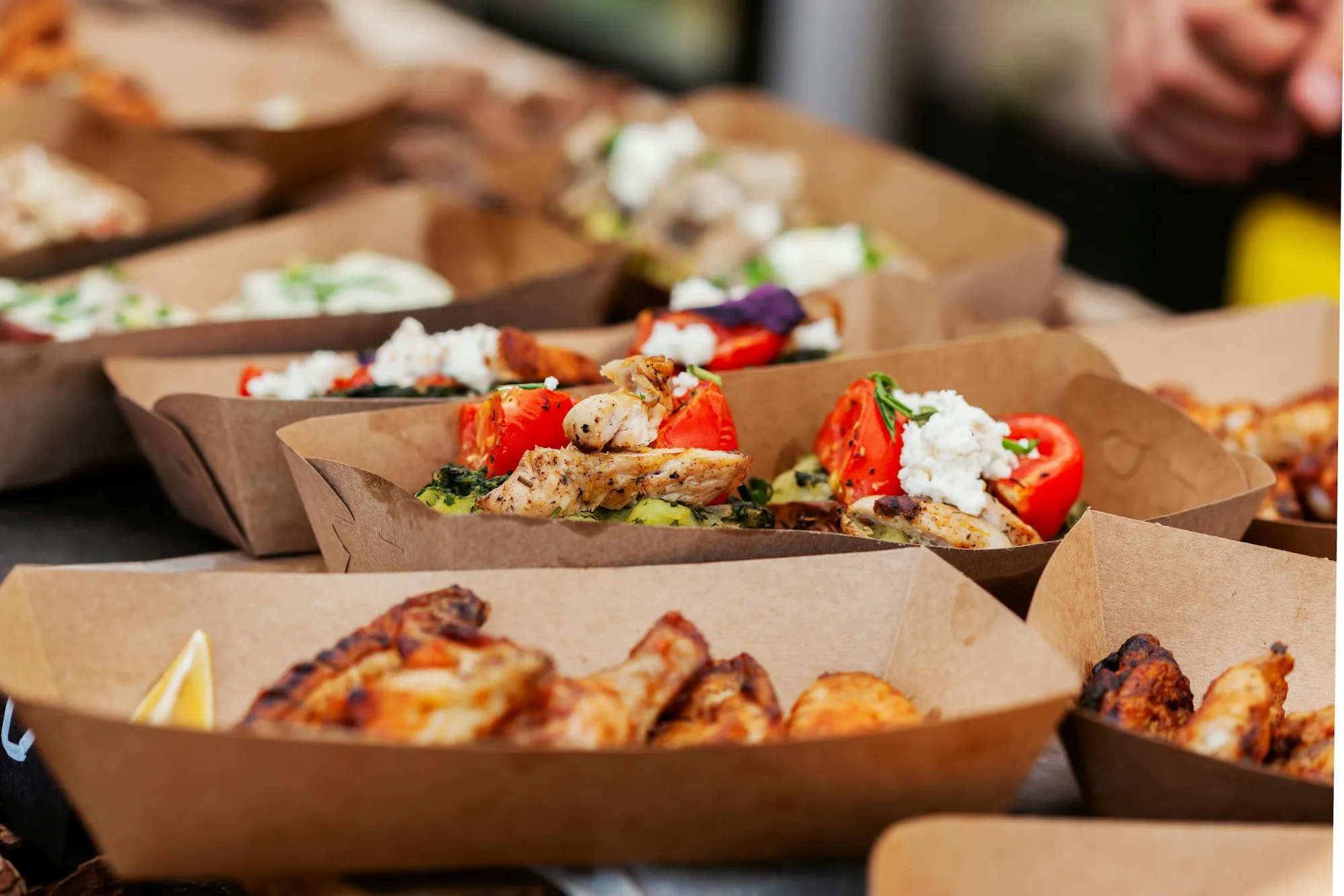
Open the food delivery app everyone uses and search your category - pizza, kebab, poke, sushi, whatever you sell. You see a scroll of places that all look the same: a stock photo, a star rating, a delivery time, a “promoted” badge on whoever paid this week. You are in there, fighting for a tap against a dozen kitchens within a five-minute walk. And every time you win it, the platform takes a quarter to a third of the ticket before you have even fired the grill. Thin margins, long hours: a hard way to live.
A takeaway website - a proper food-to-go ordering site of your own - is how you stop renting every order. Not a pretty page nobody can buy from, and not just another tile inside an app you do not control, but your own fast mobile menu where a hungry regular taps through, pays, and picks a pickup time - and where you keep almost all of the money. This guide is about what that site actually has to do, why pickup is your best friend, and how - across Switzerland and Italy - the smarter takeaways are quietly clawing back the third of revenue the aggregators have been taking for years.
The one number that should keep you up at night
Let us be blunt about the thing nobody at Just Eat or Uber Eats says out loud. On most plans, the marketplace commission on a delivery order sits somewhere around 25 to 30 percent. Add a card fee on top. So on a CHF 40 family order, the platform quietly keeps CHF 10 to CHF 12 - more than your food cost on a good night, sometimes more than your profit on the whole order.
Run that across a busy week. A hundred aggregator orders at an average CHF 35 is CHF 3,500 of revenue and roughly CHF 900 to CHF 1,000 handed over in commission. That is a full-time wage you are paying to a piece of software for the privilege of selling food you cooked, to customers in your own neighbourhood. Do that for a year and you have given away the price of a new kitchen.
Here is the part that stings most. A lot of those orders are not new customers the platform found you. They are your regulars - the people who already know your name, already love your food - who happened to order through the app because it was the path of least resistance. You paid a third of the ticket to reach someone who would have come to you anyway. That is the leak a takeaway website is built to close.
This is not an argument for quitting the aggregators. They earn their cut when they genuinely introduce you to someone new. It is an argument for not paying that cut on the orders you already own.
Why a profile on three apps is not a business you control
Most owners we talk to wave this off: “We are on Just Eat, Uber Eats and Deliveroo, the orders come in, what is the problem?” The orders coming in is exactly what hides the problem. Volume on rented land still feels like success right up until you do the margin maths.
Think about what you actually have on those platforms. You have a tile. You do not set the commission, you do not own the customer’s phone number or email, you cannot message them a Tuesday offer, and you compete on the same screen as the place that opened last month and is buying its way to the top of the list. When the platform decides to raise its rates - and they have, repeatedly - you find out by email and your margin shrinks overnight. You are running a hot stand inside someone else’s food court. The queue out front can look healthy while the landlord quietly takes a third of every plate and never tells you the names of the people eating them.
Social helps and misleads in equal measure. A good Instagram account selling a dripping smash burger or a fresh tray of cannoli is genuinely useful - it is a shop window, and stories are perfect for “today’s special, gone by 8.” But you cannot take an order inside a Reel. The algorithm decides who even sees the post, it is buried by tomorrow, and a viral clip of your loaded fries does not put money in the till on its own. A feed makes people hungry; it cannot take the payment. All it can do is point a hungry person at a place that can - and that place needs to be a page you own, not another app’s listing.
Your own ordering site is the only asset on that list you fully control. You set the menu, the prices, the look, the cut-off times, the upsells. You keep the order data, so you know your best-selling dish on a wet Wednesday and who orders every Friday. It is open at half past eleven on a Saturday night when someone is deciding between you and the kebab place down the road. And every order through it is yours - the margin, the customer, the relationship - with no commission, no middleman, no app deciding your fate.
What belongs on a takeaway website
Strip a food-to-go site to its job and you get one journey: menu, cart, pay, pickup time, done - on a phone, in under a minute, with a thumb. Build everything around that. What follows is what earns a place on the site, in the rough order a hungry visitor runs into it.
A menu built for a thumb at the bus stop
Your menu is not a PDF. A PDF is where orders go to die - pinch, zoom, squint, give up. The menu has to be a proper mobile interface: clear categories you can jump between, real photos of the dishes that earn it, prices that are obvious, and a tap that drops an item straight into the cart. People order food when they are hungry, distracted and moving - on a train, on a sofa, on a break. If choosing a meal takes more than a few taps, they bounce back to the app that made it easy. Most takeaway sites get this exactly backwards: they treat the menu as a document to read rather than a thing to order from.
Modifiers and add-ons that match how you actually sell
Real food is not a flat list. A burger needs “no onions, add bacon, make it a meal.” A pizza needs sizes and extra toppings. A poke bowl needs a base, a protein and four toppings chosen from a set. The cart has to handle those choices cleanly, price them correctly as the customer taps, and pass them to the kitchen without ambiguity. Get this right and you also get the single easiest money in food service: the “make it a meal?” and “fancy a dip with that?” prompt at the right moment, which lifts the average ticket without a single extra customer. A drink and a side suggested at checkout costs you nothing to offer and turns a CHF 14 burger into a CHF 22 order more often than you would think.
Order-ahead pickup with a real ready-by time
This is the heart of it, so it gets its own paragraph. The customer chooses a pickup time - now, or 7:15, or “in 30 minutes” - pays up front, and the order arrives at your counter with a clear ready-by time. No phone ringing off the hook during the rush, no scribbled tickets, no misheard orders, no haggling over change. The customer skips the queue, the food is hot because it was timed to their arrival, and you got paid before you started cooking. For most food-to-go businesses, pickup is the most profitable channel you have - and almost nobody pushes it hard enough.
Card and Twint payment, taken up front
Paid-in-advance orders change your whole evening. No-shows drop, because people who paid turn up. Cash handling shrinks. The order is committed the moment it lands. Card and Twint at checkout is the baseline expectation now - a site that makes someone “pay at pickup” feels broken and leaks orders to the apps that took the money cleanly two screens ago.
One-tap reordering for the regulars
Most takeaway revenue is repeat. The same people, the same favourites, more often than you would guess. A returning customer who can re-order Friday’s usual in two taps is a customer who will never bother opening the aggregator app again. Saved orders and a remembered cart are not a luxury feature - they are how you make ordering direct genuinely easier than ordering through Uber Eats, which is the whole game.
Controls that protect the kitchen on a Friday night
A menu that takes orders faster than you can cook is a different kind of problem, and a good ordering site has the controls to stop it. A pacing limit - say, a cap on orders per fifteen-minute slot - keeps the tickets coming at a rhythm your line can actually hold, instead of forty bowls landing at 19:30. A “busy mode” that pushes the next pickup time out to 40 minutes when the kitchen is slammed sets the expectation honestly, so nobody turns up early and angry. And service hours that match the kitchen, not the shop sign, mean the order button switches off when the fryer does. These sound like small settings. On the night they are the difference between a smooth rush and a meltdown of cold food and one-star reviews.
The honest practical stuff people actually check
Around the ordering flow, a handful of plain things decide whether a first-timer trusts you with a card payment: opening hours that are correct (including the kitchen’s last-order time, not just the shop’s), a clear pickup address with a map, a phone number that works, allergen and dietary labels that are real, and a sold-out toggle so you are not selling the wing platter you ran out of at eight. Concrete detail is what earns the card payment. “Fresh, fast, delicious” tells a stranger nothing. “Kitchen open till 22:30, ready in 15 minutes, halal” is what gets the order tapped.
Reading a list of features is one thing; tapping through the real flow is another, so we put one online: try the live takeaway demo. The shop is made up, but nothing else is - the menu, the modifiers, the cart, the pickup-time picker and the checkout all run exactly as they would on your own site.
Turning a hungry visitor into a paid order
Having the right pages gets you to the start line, no further. What separates a menu that merely looks nice from a site that actually fills the till comes down to a few unglamorous details - and in food, they are mostly about speed and friction.
Speed is not optional when someone is hungry. A hungry person is the most impatient customer on earth. Make the menu stall for a few seconds and a chunk of them are already back in the app that snapped open instantly. A site that loads fast and feels right on a phone is simply table stakes now - and it is the reason a bloated, plugin-heavy build bleeds you orders in the one hour you cannot afford to lose them.
Photos sell the food. You cannot smell a website. Buyers order with their eyes, and a sharp, well-lit shot of the actual dish does more than any paragraph of description. You do not need a studio - good phone photography in decent light, shown big, beats stock images of someone else’s burger every time. The site’s job is to show the food at its best and then get out of the way of the order button.
Make the next step one obvious tap. Every screen should have a single clear thing to do: add to cart, go to checkout, pick a time, pay. One unmistakable button, never a row of them squabbling for the thumb. The checkout especially should be ruthless: as few fields as you can get away with, guest checkout that does not force an account, payment in a couple of taps. Every extra field is an order you lose at the last second.
The single highest-value action is the completed pickup order, paid up front. Be clear-eyed about it. Not a follow, not a newsletter sign-up, not a “view menu” - the paid pickup order is the thing that pays your rent, and it is the action the entire site should be bent toward. Everything else is in service of getting more of those, more often, at a better margin than the aggregators leave you.
Push direct ordering at the moment of handover. This is where the website quietly wins the war. Put a small flyer or a QR sticker in every single bag - including the ones that came through Just Eat and Uber Eats: “Loved it? Order direct next time and skip the fees - same food, faster, often a little cheaper.” A receipt insert, a sticker on the lid, a card by the till. You are not poaching strangers; you are inviting people who already chose you to choose the cheaper-for-everyone door next time. Done consistently, this single habit migrates your repeat business off the 30% platform and onto your own site, one bag at a time.
Notice that none of it is technical. It is basic shopkeeping, moved onto a phone - and because so few food-to-go places bother to get the basics right, getting them right is most of the edge.
Aggregators for discovery, your site for the regulars
At some point every owner asks it: “if not through the apps, how does anyone find the site?” The honest answer is that the apps and your site were never rivals - they are two tools for two different jobs, and the winning move is to use each for what it is actually good at.
The aggregators are a discovery channel, and you should treat them as exactly that. Just Eat, Uber Eats and Deliveroo are unbeatable at one job: putting you in front of someone in your area who is hungry right now and does not yet know you exist. That first order is worth paying commission on, because it is a customer you did not have. Stay on them. Keep your menu and photos sharp there. Run the odd promo to win the first try. Just stop pretending a tile on a marketplace is a substitute for owning your customers - it is the billboard, not the shop.
Your own site is the loyalty channel, and it is where the margin lives. Once someone has tried you and loved it, every future order should be nudged direct - through the bag insert, a printed loyalty card, a “10th coffee free” stamp, a quick text or email if they opted in. Google is the other quiet workhorse: a fast, well-built site with a proper Google Business Profile is what shows up when someone searches “kebab near me open now” or your shop’s name, and that traffic is free and yours. Instagram and TikTok do the top-of-funnel job - a good food clip can genuinely fill a slow night - but only if every one of them points to a link in bio that lands on your own ordering page, not an app.
Run the numbers on a single regular and the case makes itself. Say a customer orders from you twice a month at CHF 30. Through an aggregator at 28%, that is about CHF 200 of commission handed over across a year, on one person. Move that same customer to your own site and almost all of it stays in the till - and you can afford to hand them a free side every tenth order and still come out far, far ahead of the platform deal. Now multiply by every regular you have. That is the prize, and it is hiding in orders you are already getting.
In practice the playbook is not complicated. Stay on the aggregators for reach and let them earn their cut on genuinely new customers. Build your own ordering site properly so it is the easier, cheaper path the moment someone comes back. Then spend your loyalty effort - the bag inserts, the stamps, the texts - dragging repeat business off the platforms and onto the site. Give it a year and the aggregators are still introducing you to new faces while a growing share of your repeat orders quietly stop paying the 30%. The apps buy you strangers. Your site keeps the regulars. Run both, each doing the job it is good at.
Your takeaway website: ready-made or custom?
Say you want to own your ordering. One question is left: how do you actually get the site? For most food-to-go kitchens, hiring someone to build it from nothing is the expensive answer to a problem that has already been solved.
A bespoke ordering system is a months-long project with a five-figure invoice, where you are paying a developer to reinvent a menu, a cart, modifiers, a pickup-time picker and a payment flow that every ordering site on earth already has. You carry the risk, the timeline slips past the date you wanted to launch, and at the end you own a codebase you now have to host, update and secure forever - usually while running a kitchen, which is a full job by itself. A handful of large chains with genuinely unusual needs should build custom. Most takeaways are not that, and should not pretend to be.
The alternative is a productised, ready-made ordering site: the menu, cart, order-ahead pickup and checkout are already built, tested and working, and we make them yours. The structure is proven because it has been refined across many food businesses. You go live in days, not months. You pay a sensible one-time setup and a flat monthly fee that covers hosting, maintenance, security and small changes - and, the whole point, 0% commission on your orders instead of the 25-30% the aggregators skim. It stays fully your brand: your colours, your menu, your photos, extended with extra features later if you grow. Starting from something that already works gets you cooking sooner; it does not box you in.
This is how our ready-made takeaway and food-to-go website is built, and it sits alongside our other ready-made websites for specific industries. The ordering system a custom build would have handed you, minus the months of waiting and the five-figure bet - live and taking commission-free pickup orders by next week, not next quarter.
Where to start
If only one idea here survives the week, let it be the bag insert. Get a fast, simple ordering site live, keep your aggregator tiles working for discovery, and then put a “order direct next time” card in every single order that leaves your kitchen - including the ones the apps sent you. Within a few months, the regulars who used to cost you a third of the ticket are ordering on your own page for almost nothing, the food is hotter because pickup is timed, and you are keeping the money you cooked for.
For years the ordering system was the slow, costly thing standing between you and your own orders. That barrier is gone. The site is ready, the cart works, the pickup flow works, and within days it can be carrying your brand and your commission-free orders.
Frequently asked questions
- How much does a takeaway website with online ordering cost?
- A bespoke ordering app built from scratch runs into five figures and takes months. A ready-made site like ours is a one-time setup plus a low all-inclusive monthly fee covering hosting, maintenance, security and small changes - the current figure is on the solution page. The part that matters: we take 0% commission on your orders, while the big aggregators take 25-30% of every single one.
- I am already on Just Eat and Uber Eats. Do I still need my own site?
- Yes, because they do different jobs and the maths is brutal. Aggregators are great at one thing - getting you discovered by people who do not know you yet. But on a CHF 35 order they keep CHF 9-10, and the customer belongs to them, not you. Your own site is where your regulars - the people who already love your food - order direct and cost you almost nothing. Stay on the aggregators for reach; move your repeat customers to your own site for margin.
- How long before the ordering site is live?
- A few working days. We set up your brand, colours and full menu, connect a card payment provider, and switch on order-ahead pickup. You add or edit dishes and sold-out items yourself from a simple dashboard. A custom-built app, by contrast, is usually a two to four month project before a single order comes in.
- Does it handle payment and pickup times, or just show the menu?
- It handles the whole flow. A customer browses the menu on their phone, builds a cart, pays by card or Twint, and picks a pickup time. The order lands at your counter with a clear ready-by time, so the food is fresh when they walk in. You are not chasing cash or reading orders off a phone call during the dinner rush.
- Will having my own site actually bring in more orders?
- It moves orders to where you keep the money, and it removes the friction that loses them. A clean mobile menu with one-tap reordering turns a hungry regular into a paid order in under a minute, with no commission skimmed off. The biggest win is not always new orders - it is the orders you were already getting on the aggregators, earning you a third more each.