







The Bakery Website That Fills the Counter
A mother sitting at her kitchen table with eleven days until her daughter turns seven is not thinking about bread. She is weighing something far more delicate: who can she trust to get this exact cake right, on the morning it has to be perfect, with no second chance? She is picturing the candles, bracing for disappointment, half-remembering a place a friend once raved about. Whichever bakery answers those worries first - shows her real cakes it has actually made, makes the request easy, feels like a person rather than a void - wins a job worth a hundred croissants. And nine times out of ten, the place she ends up trusting is the one with a proper bakery or pastry shop website doing the reassuring on its behalf.
That same quiet calculation runs behind every decision a customer makes about your shop, from the Sunday loaf to the wedding dessert table. Is this place any good? Will I be let down? Can I sort it without a fuss? A website is where you answer all of that before a single word is exchanged - not a dusty one-pager with last year’s Christmas hours, and not a profile on a delivery app that takes a cut of every brioche, but a home of your own. This guide is about what that site actually has to do, what turns a scroll into a sale, and why - across Switzerland and Italy - the bakeries quietly winning the best custom are the ones who stopped treating their website as a formality.
What your bakery website is really doing
Most bakers think the website is there to list what is in the case. Reasonable, but backwards. The bread is the easy part. People already trust that a bakery has bread. What your website is really doing is answering two questions that decide whether a stranger becomes a customer, and both get settled in seconds, on a phone, usually before a word is read.
The first is simply: is this place any good, and is it worth leaving my flat for? A photo of a real, golden, properly blistered crust answers that better than any sentence. The second is more practical and more urgent: are they open right now, and can I get what I want without a fuss? Get those two right in the first glance and you have a footstep heading your way. Get them wrong - a slow site, a stock photo of generic bread, hours that might be from 2022 - and that person is already tapping the next pin on the map.
There is a third question, and it is the one that pays for the year: who do I trust to make my daughter’s birthday cake? That is a different decision entirely. Nobody orders a celebration cake on a whim from a place they have never heard of. They look you up, they study your past cakes, they read what other parents said, and only then do they enquire. Your website is the one place in that decision where you set the story instead of hoping a delivery app or a stray Instagram post does it for you.
Why a delivery app and an Instagram feed are not enough
Plenty of bakers tell us the same thing: “We’re on Uber Eats and Just Eat, and we post on Instagram every day - isn’t that the website handled?” Fair question. The answer is no, and it has nothing to do with how hard you are working and everything to do with who actually owns the customer.
The delivery platforms - Uber Eats, Just Eat, Deliveroo, Glovo, whichever rule your area - are very good at one thing: putting your name in front of someone who has already decided they want food delivered, right now. Use them for what they are. But understand the deal. They take a commission on every single order, often a brutal one, the customer’s loyalty belongs to the app and not to you, your margins on a four-franc pastry were thin before anyone took a slice, and the day you leave the platform you simply disappear from it. The app is a food court. You are a stall in it. Handy for catching passing hunger, but you do not own the building, set the rent, or keep the list of who bought from you.
Instagram is the other half of the confusion, and the more seductive one because it genuinely works as a shop window. A flat-lay of pistachio cream puffs does numbers, a story of the morning bake makes mouths water, and yes, it builds a following. But it is rented land too. The algorithm decides who sees a post, that post is buried under newer ones by tomorrow, and a feed is a terrible place to take an order - there is no “reserve six croissants for Saturday,” no cake-enquiry form, no opening hours a search engine can read. Instagram is the top of the funnel. Its whole job is to send an admirer somewhere they can actually become a customer. That somewhere should be a site you own.
Your website is the only thing in that list you genuinely control. You decide how it looks, how fast it loads, what it says about your craft, which words it targets on Google, and exactly what happens when someone wants to order or ask about a cake. It is open at eleven at night when a dad suddenly remembers the party is Saturday. It works while both your hands are in the dough at five in the morning. And every order, every cake enquiry, every regular who reserves their bread stays yours - no commission, no middleman, no algorithm deciding whether today is your day.
What belongs on a bakery or pastry shop website
A bakery site lives or dies on two things: making people want what you make, and making it effortless to get it. Everything else supports those. Here is what earns its place, roughly in the order a hungry visitor meets it.
Photography that does the selling
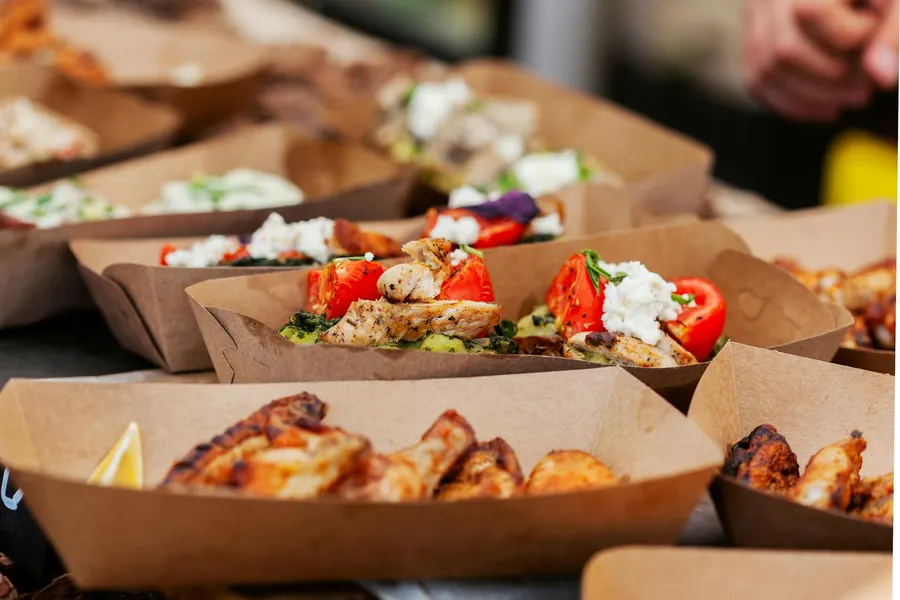
Start here, because nothing else matters as much. People buy bread and cake with their eyes, and they have a ruthless instinct for the difference between a real loaf and a stock image. Dark, yellow, phone-snapped photos of a half-empty case actively cost you customers. Bright, honest, close-up photography of your actual sourdough, your actual mille-feuille, the steam still coming off the morning batch - that is your conversion engine. We say this to every food client and it is always the cheapest high-return decision they make: book a half-day with a proper photographer, then build a site that shows the results at full size and gets out of their way.
A product showcase, not a static menu
A bakery website needs more than a list of words and prices. It needs a showcase: bread, viennoiserie, cakes, tarts, savouries, seasonal specials, each with a real photo and a line of plain description that makes someone want it. Group it the way a customer thinks - “morning pastries,” “celebration cakes,” “gluten-free,” “for the weekend” - not the way your supplier invoices are filed. If you sell a thing that sells you, the seasonal panettone, the Easter colomba, the summer fruit tarts, give it room to shine when its moment comes. This is the page that turns “I might pop in” into “I’m definitely going in.”
Order and collect, the feature that protects your morning
This is where a bakery site starts earning its keep instead of just looking pretty. Order and collect lets a customer choose their items and a pickup slot, pay or reserve, and walk in to a bag with their name on it. Think about what that actually changes. The phone stops ringing off the hook during the bake. The Saturday crowd who want a guaranteed loaf reserve it the night before instead of arriving to find you sold out at nine. The office that wants thirty pastries for a Monday meeting books it without a single call. You bake to real demand, you cut waste, and the orders arrive while your hands are busy. For most bakeries this is the quiet workhorse of daily revenue.
The custom-cake enquiry, your highest-margin lead
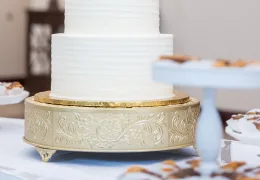
Now the part that, page for page, makes you the most money, and the part most bakery sites bury or skip entirely. A celebration cake is your highest-margin job: a single wedding or christening cake can be worth a week of croissant sales, and the customer is rarely price-shopping by the franc - they are choosing whoever they trust to get their big day right. The site needs a dedicated custom-cake page that does two things at once. It shows off a gallery of cakes you have actually made - tiers, drips, sugar flowers, the lot - so the visitor believes you can deliver. And it gives them a clean enquiry form: the date, number of servings, flavours, dietary needs, a place to upload a reference photo, and a note. That enquiry lands in your inbox as a qualified, high-value lead. We will come back to this, because if there is one thing to get right on the whole site, it is this.
Hours, location and the small stuff that decides a visit
It sounds dull. It is decisive. Half of “is it worth leaving the flat” is “are they even open.” Your opening hours have to be current, obvious and machine-readable so Google can show them, with holiday and seasonal hours kept honest - nothing burns a first impression like a locked door at a time your site said you were open. Add a map, the address, parking or the nearest stop, whether you have a few tables, whether dogs are welcome at the door. These are the questions a stranger asks before walking over, and answering them removes the friction between “looks good” and “I’m going.”
Catering and trade, the orders that come in bulk
If you supply offices, cafes, restaurants or events - and most bakeries can, profitably - say so plainly with its own page. A morning-meeting platter, a wedding dessert table, a standing weekly order for the cafe down the road: these are larger, repeatable tickets, and the businesses placing them want to find a clear “here’s how to order in volume” rather than guess whether you do it. A simple catering enquiry, separate from the daily order flow, captures a kind of customer who is worth a great deal over a year.
Proof you are the real thing
Around the essentials, a handful of things tip the trust decision your way: a short, honest story of the bakery and the people in the apron, your craft and what you do differently - the long fermentation, the stone mill, the family recipe that came with the shop. Genuine reviews. A photo of the actual baker, flour on the forearms, not a stock model. And the local love itself is proof: “your neighbourhood bakery since 1994,” “we bake everything here from scratch every morning.” Specifics beat adjectives every time. “Artisan quality” means nothing. “Forty-eight-hour sourdough, milled and baked on site” means everything.
If you would rather see all of this assembled into one coherent shop than read about it in a list, we built a complete demonstration you can click through: explore the live demo. It is a fictional bakery, but every flow - the product showcase, order and collect, the custom-cake enquiry, the catering form, the hours - is real and working.
Turning visitors into customers
Having the right pages is necessary. It is not enough on its own. The gap between a site that looks lovely and a site that fills the counter and the order book comes down to a few unglamorous details.
Speed and mobile decide it before anything else. Almost everyone finding a bakery is doing it on a phone, often hungry, often walking, with no patience at all. A site that makes someone wait while a heavy page wheezes into view has lost them before the first photo of bread even loads - nobody stares at a spinner on an empty stomach, they just tap the next pin. Fast loading and a genuinely good phone experience are not technical luxuries; they are the price of entry. It is also exactly why a bloated, plugin-stuffed website quietly costs you custom every single morning.
Make the next step obvious and small. Every page should have one clear thing to do: order for collection, enquire about a cake, see the opening hours, get directions. Not six competing buttons - one obvious one for the moment that visitor is in. The custom-cake form especially should feel like a friendly conversation, not a tax return. Ask only what you genuinely need to quote, keep the wording plain, let them upload the inspiration photo, and you will get more finished enquiries and fewer abandoned ones.
Answer speed wins the cake. This is not strictly a website feature, but the site sets it up. A custom-cake enquiry that reaches you the instant it is sent, and that you reply to within a few hours, converts far better than one you get to in two days - by which point the parent has asked three other bakeries and booked the first to answer warmly. Build the site so every enquiry and order hits your inbox immediately, and treat that inbox like the order book it is.
Trust signals next to the action. A glowing review, a photo of a cake you actually made, the year you opened, a real phone number - placed right beside the order button or the cake form, not buried on an “about” page - measurably lifts how many people press send. People hand over a deposit and their daughter’s birthday when they feel they are dealing with a real baker, not a faceless form.
None of this is exotic. It is simply rarely done well, which is precisely why doing it well puts you ahead of the bakery down the road.
Organic versus paid: where your effort actually pays
Sooner or later the question is “how do people find the site?” There are two answers, they work on completely different clocks, and a smart bakery uses both - though not in equal measure and not in the wrong order.
Organic reach is what you earn from search and your own standing: the person who types “bakery” and a place name, “birthday cake near me,” “sourdough nearby,” or your shop’s name directly. For a bakery, local is everything here, and the single highest-return move is a complete, accurate Google Business Profile - hours, photos, reviews, the lot - working hand in hand with a fast, properly local website behind it. That pairing is what puts you in the map results when someone nearby is deciding where breakfast comes from. It builds over months rather than overnight, but once it works it keeps working, the trust is genuine, and you pay nothing per visit. A bakery with a year of solid local presence has built something a competitor cannot simply buy.
Paid reach is the opposite: instant, and rented. Where it earns its place for a bakery is narrow and worth knowing. Instagram and Facebook ads are the strong play - a beautifully shot cake or a seasonal special, targeted to people within a short drive, is unusually effective because the product photographs so well and the decision is so visual; point those ads at your custom-cake page in the run-up to wedding season or the festive weeks and the maths can be excellent. Google Ads can put you at the top of “birthday cake [area]” the afternoon you switch them on, useful for the high-value cake searches in particular. The catch is the same everywhere: the moment you stop paying, the reach stops, and you are buying clicks on margins that are already tight on the everyday items.
For most bakeries the sane order is this. Build the site properly first, because every paid tap lands on it and a fast, mouth-watering site is what turns those clicks into orders and enquiries. Then run focused paid bursts - seasonal cake campaigns on Instagram aimed at your enquiry page, where the margins justify it - while your local organic presence grows underneath. Over a year the ad spend can ease off as the organic foundation carries more of the weight. Paid buys you this weekend. Organic buys you every weekend after. You want both, landing on a site that does your bread justice.
Ready-made or built from scratch?
So you are convinced the site matters. The last real decision is how to get one, and honestly, for most bakeries the traditional bespoke route is the wrong starting point.
A custom build is a months-long project with a five-figure invoice, where you are paying a developer to reinvent a product showcase, an order-and-collect flow, a cake-enquiry form and an opening-hours block that have all been built thousands of times over. You carry the risk, the launch date drifts, and at the end you are left owning a pile of code you now have to maintain, update and secure yourself - on top of running a bakery at four in the morning. There are businesses for which a full custom build is right: a large chain with genuinely unusual systems. A single shop or a small group almost never is.
The alternative is a productised, ready-made site: a bakery website that is already built, tested and complete, which we then make unmistakably yours. The structure is proven because it has been refined across many food businesses, so the order flow and the cake enquiry simply work from day one. You go live in days, not months. You pay a sensible one-time setup and a flat monthly fee that covers hosting, maintenance, security and small changes - and, unlike the delivery apps you are nudged toward, no commission on the orders or cake enquiries it brings you. It stays fully customisable: your brand, your colours, your photography, with bespoke features added later if you grow into them. Starting from a ready-made shop is a running start, never a fence you bump into.
That is exactly the thinking behind our ready-made bakery and pastry shop website - one of a whole line of ready-made websites for specific trades. You get the shop a custom build would have given you, without the months and the five-figure gamble, and you can be taking orders and cake enquiries next week rather than next quarter.
Where to start
If you take one thing from all of this, make it the custom-cake page. Most bakeries pour their energy into showing off the daily case - the part everyone already assumes you do well - and neglect the one page that brings in the high-margin jobs that make the difference at the end of the month. Get a fast, appetising, honest site live, switch on order and collect so the morning runs itself, point a small seasonal campaign at a clean cake-enquiry funnel, answer every enquiry warmly within a few hours, and you have a quiet little marketing engine working while you do the part you are actually brilliant at.
The hard part used to be getting the site built at all. It is not anymore. The shop is ready, it works, and it can be wearing your brand and taking your orders in a matter of days.
Frequently asked questions
- How much does a bakery or pastry shop website cost?
- A custom build runs into five figures and takes months of back-and-forth. A ready-made, productised site like ours is a one-time setup plus a low all-inclusive monthly fee that covers hosting, maintenance, security and small changes - the current figure is on the solution page. There is no commission on the orders or cake enquiries it brings you, which is the whole point: a delivery app would take a cut of every croissant.
- I have a busy Instagram. Do I still need a website?
- Yes, and they do different jobs. Instagram is where people fall for a photo of your eclairs; your website is where they actually order the birthday cake, check whether you are open on Sunday, and find you on Google when they search for a bakery nearby. Posts vanish down the feed in a day and the algorithm decides who sees them. Your site is open, searchable and yours, and it turns the admirers Instagram sends you into paying customers.
- How long before it is online?
- A ready-made bakery site goes live in a few working days. We set up your brand, colours and photography, you load your product showcase and opening hours from a simple dashboard, switch on order and collect, and it is live. A bespoke project is usually a two to four month commitment before a single customer sees it.
- Will it help me show up on Google for my area?
- A fast, well-structured site with proper page titles, your real opening hours, local content and clean menu and cake pages is the foundation of showing up when someone searches for a bakery nearby. Pair it with a tidy Google Business Profile and the two reinforce each other. No site can promise the top spot, but the shops that appear are the ones with a technically sound site that answers what hungry locals actually search for.
- Can customers order and request cakes online?
- Yes. Order and collect lets a customer reserve their loaves and pastries for a pickup slot, and a dedicated custom-cake page collects celebration-cake enquiries with the date, servings, flavour and a reference photo. Both land directly in your inbox, with no per-order fee and no middleman. That cake enquiry form is usually the single most profitable thing on the whole site.