













The Financial Advisor Website That Earns Trust
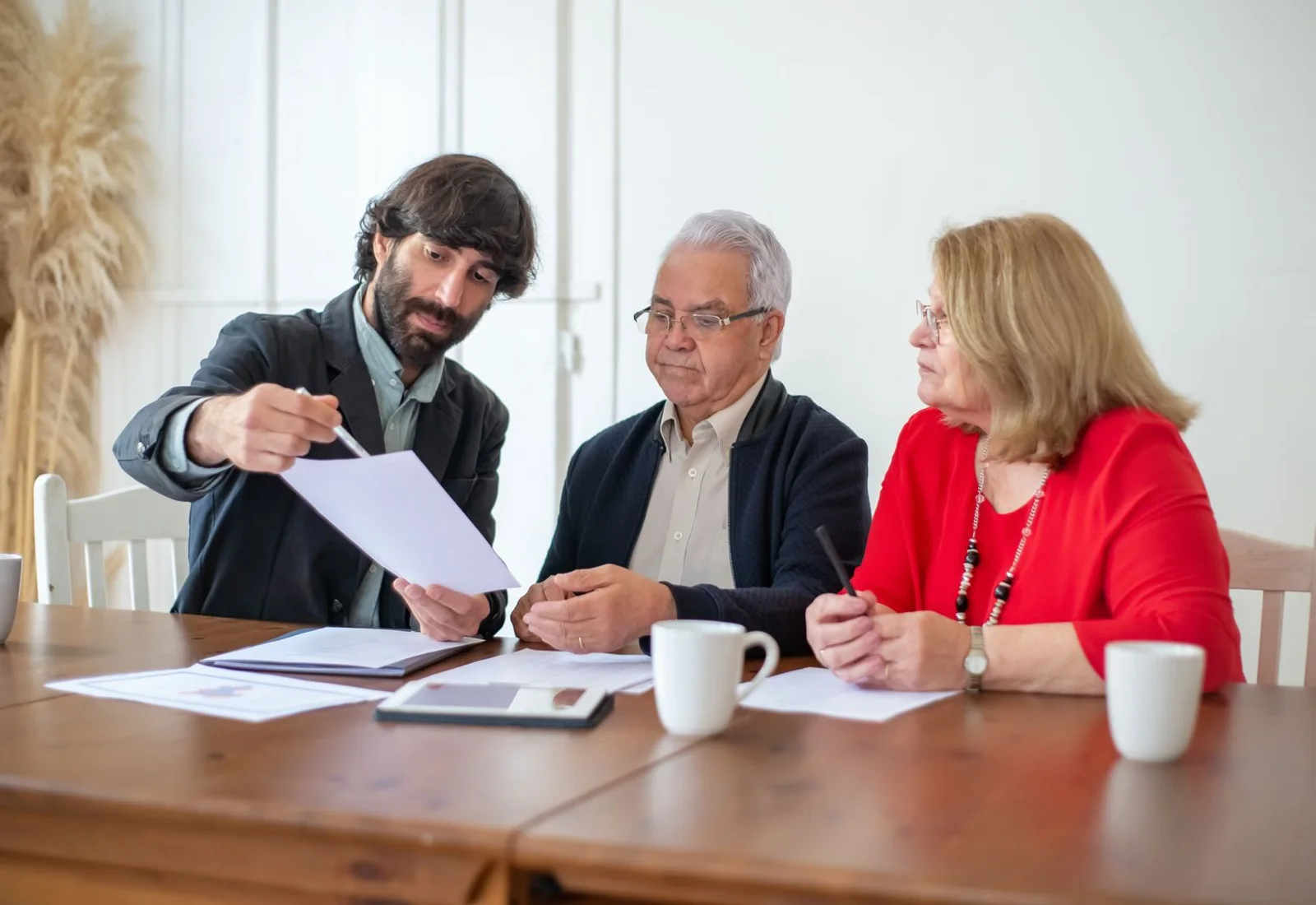
A client does not choose you for the return you promise. They choose you because, at some point, they decided they could trust you with the most private thing they own after their health: the money they set aside over a lifetime. That decision is made long before a phone call, almost always alone, in the evening, in front of a screen. And here is the uncomfortable part of the trade: someone recommended to you looks you up before they entrust you with a single franc, and what they find on your financial advisor website decides whether the trust that word of mouth built survives the first thirty seconds or dissolves in silence.
That is the gap this guide fills. Managing wealth is the technical half; being the person a family entrusts with their savings, their retirement and their future is the half that builds a practice that lasts. Your site conveys that second half in ten seconds, or it misses it entirely. In Switzerland and Ticino, the advisors who keep good clients for twenty years are not the ones with the longest product list. They are the ones whose site makes a stranger feel, before any meeting, that here is a serious, discreet and genuinely independent person. Let us start with what that site has to do.
How a client actually chooses an advisor
Almost every advisor builds a site to list what they do. Understandable, but it misses the point. Someone looking for an independent financial advisor already assumes you can read a portfolio and build a pension plan. What the site is really doing is answering a far heavier question, the one every prospect asks silently before they ever write to you:
Can I put my wealth in this person’s hands, and sleep at night?
That is not a question about technical competence. Everyone claims technical competence. It is a question about trust, discretion and independence, and it is answered in the first ten seconds, on a phone, before a single line of content is read. A site that opens instantly, looks current and presents the practice with calm assurance says “this person is serious and discreet.” A site that stutters, looks like it was built in 2014, or hides behind stock photos of skylines and handshakes says the exact opposite, and the prospect closes the tab and tries the next name their acquaintance suggested.
There is a second thing that makes this trade different from almost any other. The relationship you sell is long, and it rests on three quiet pillars. The first is trust: handing over your money is an intimate act, and no performance chart substitutes for it. The second is discretion: someone with meaningful wealth does not want it on display, they want to know it will be treated with reserve. The third, and perhaps the most decisive today, is independence: the client wants to be sure the advice they get serves their interests, not the commissions of whoever sells the product. A site that conveys calm, reserve and transparency about fees beats any promise of return. Understatement beats noise. Reassurance beats the hard sell.
Say it plainly: choosing an advisor is a due-diligence process. The client cross-checks the recommendation they received against what they find online, searches “independent financial advisor Lugano” or “wealth planner Ticino,” reads, compares, and only then decides who earns a first meeting. Your site is the document that diligence rests on. If it does not exist, or exists badly, someone else makes that decision for you.
Why a LinkedIn profile is not enough
Plenty of advisors tell us a version of the same thing: “I’m on LinkedIn, I post now and then, I have my contacts - surely that covers it?” Fair question, and the answer is no, for reasons that have nothing to do with effort and everything to do with ownership and control.
LinkedIn is genuinely useful for part of the trade. It is where entrepreneurs, executives and professionals actually gather, and a considered post on a pension deadline or a tax change builds real authority over time. Use it. But understand the deal. It is rented ground: the algorithm decides who sees you, a good post is buried within a day, and your profile is formatted exactly like every other advisor’s - same structure, same fields, no room to explain why an owner selling their company or a family with a succession to plan should choose you. A LinkedIn profile puts you in a list. It cannot create the trust it takes to be handed a portfolio.
And then there is discretion, which weighs in a specific way in this trade. A wealthy client weighing who to entrust their assets to often will not even click “like” on your post, because they do not want to publicly signal that they are in the market for an advisor. Your site, by contrast, is visited in silence, without an account, without leaving a trace visible to others. It is the place a private person can study you calmly before exposing themselves. LinkedIn is the friendly handshake at an event; your site is the discreet meeting room where the relationship is built.
Out of that whole list, one thing answers to you and no one else: your own site. The wording a prospect meets, the photo at the top, the speed it loads at, the way you explain how you are paid - all of that is yours to set, and none of it is borrowed. It is open and working at eleven at night, when a business owner quietly wonders whether their current advisor is really acting in their interest. It does not bury you behind an algorithm and it does not charge you per lead. And every meeting request, every message, every client logging back in to reach their documents stays yours: no middleman, no commission, no platform taking a slice of the relationship.
What belongs on a financial advisor website
An advisor’s site lives or dies on two things: how clearly it explains what you do, and how convincingly it shows you can be trusted to do it. Everything else is trimming. Here is what earns its place, roughly in the order a visitor meets it.
Service pages that explain, not just list
A bare list - “planning, investments, pensions, succession” - tells a client nothing they did not already know. The services that bring real relationships, and real hesitation, each deserve a proper page, written in the reader’s language rather than the industry’s.
Wealth planning is the entry point for many: putting order into assets, cash, property and life goals, and understanding where things are heading. Investments should be explained the way you actually manage them - philosophy, horizon, risk management - not with an asset-class table no client reads. Pensions deserve dedicated, concrete space, because they are why many people in Switzerland look for an advisor in the first place: pillar 3a and its tax advantages, the second pillar with its choices at retirement, the pension-fund buy-in, planning the capital withdrawal. Succession touches the most emotional chord of all - protecting the family, passing on the business, avoiding conflict - and a page that handles it with tact is worth ten on performance.
These pages do double duty. They reassure the client weighing whether to trust you with an important decision, and they are exactly what search engines use to put you in front of someone typing “second-pillar buy-in” or “retirement planning” rather than just “financial advisor.” Write them for the person seeking clarity first; the ranking benefit follows. If your clients are at all international - and in Ticino they often are - multilingual pages stop being a nicety: someone entrusting a portfolio wants to read the detail in their own language.
The independent approach and fee transparency
Here is the page that truly sets you apart from a product seller, and it is the one almost every site avoids. A sophisticated client knows the real risk is not a bad investment: it is receiving advice that serves the giver more than the receiver. A page that clearly explains your model - that you are an independent advisor, how you are paid, which conflicts of interest you avoid, and why your advice is not tied to a bank or an insurer - says “I’m on your side” far louder than any statement of intent. Fee transparency does not scare off the right client; it attracts them, because it is exactly what they are looking for and rarely find said out loud.
The bio and credentials
People do not entrust their wealth to an abstract firm; they entrust it to a specific person. The “about” page is not a formality: it is often the most visited page on the whole site, and it is where trust is decided. It deserves a real, well-shot photo - not a stock image - a professional path told with restraint, the years of experience, the relevant credentials and memberships stated plainly, and a line or two on what drives you as a professional. Concrete detail beats adjectives every single time: “twenty years alongside business owners through succession” says more than “trusted partner for your future.” If you work with a team, show them, with names and roles. The client is choosing who to trust with their most delicate decisions; tell them who you are.
A secure client area
An extra that pays for itself quietly, and signals seriousness like few other things: the secure client area. Letting a client log in to see their documents, portfolio reporting or confidential communications behind a protected login removes a stack of email from your day and makes the practice feel organised, modern and safe. It matters especially here, where the documents are sensitive: a proper client area, on Swiss hosting over an encrypted connection, is far safer than the email attachments much of the sector still relies on, and it aligns with what the revised Swiss data-protection law expects for personal data. It is not glamorous, and clients rarely mention it, but it is the kind of thing that makes them stay and feel properly looked after.
The discreet first-meeting request
If you make me name the single highest-value action on the whole site, it is not a service tile, polished as it may be. It is the first-meeting request. But it has to be built in the right tone. A private client does not want an aggressive form with ten fields and a promise of returns; they want a discreet, no-obligation invitation to a first confidential conversation, to see whether there is a fit before any figures are discussed. A few plain questions, a calm tone, an explicit assurance that the first meeting is exploratory and not binding. That single request turns a vague “maybe I should talk to someone” into a named, qualified lead sitting in your inbox - and for a practice built on long relationships, it is the most valuable thing the site can do.
If you would rather see all of this assembled into one working site than read about it in a list, we built a complete demonstration you can click through: see the live demo. It is a fictional advisor, but every flow - services, bio, client area, first-meeting request - is real and working.
Making the financial advisor website convert
Having the right pages is necessary. It is not enough. The gap between a site that looks the part and a site that brings first meetings comes down to a handful of unglamorous details.
Speed and mobile come before everything. The person looking you up in the evening, after hearing your name from an acquaintance, is almost never at a desk. If your homepage makes them wait while a bloated theme drags itself onto a phone screen, you have lost them somewhere around the second or third second, long before your reassuring bio has rendered. Quick to load and effortless on a small screen is not a refinement you add later; it is the thing that decides whether the meeting is requested at all.
Understatement is itself a message. In this trade, a loud site works against you. Muted colours, space that breathes, measured language free of superlatives convey exactly the calm and control a client wants from whoever will manage their assets. Discretion is not just a privacy policy; it is an aesthetic. A site that looks built to impress raises suspicion; a site that looks built to reassure converts.
Response speed closes the case. The site can hand you the request the instant it is made; what happens next is on you. A prospect who hears back within a few hours, calmly and without pressure, already feels looked after. Leave the same message until tomorrow and you are often replying to someone who has already spoken to another advisor whose site answered first. Wire every form so it lands in front of you immediately, and run that inbox with the same care you would give an important call.
Reduce friction, but not reassurance. Every extra field on the meeting request is a small reason to put it off, and cautious people put things off easily. Ask for the bare minimum to start the conversation and gather the rest in person. At the same time, a discreet line next to the button - “a first exploratory meeting, confidential and no-obligation” - measurably lifts how many people actually request it. The goal at this stage is a conversation started, not a complete file.
A note of substance, because it matters in this field: the content on your site informs, it is not personalised investment advice. Saying so with one measured line where it fits - that the pages offer general information and that every situation should be assessed in a dedicated meeting - does not weaken the site. It makes it more credible, because it is exactly the kind of prudence a client expects from a serious professional.
Organic versus paid: where the budget actually goes
Sooner or later the question becomes “how do people find the site?” There are two answers, they run on completely different clocks, and a sensible practice uses both - but not in equal measure and not in the wrong order.
Organic traffic is what you earn from search and your own standing - people who type “independent financial advisor Lugano,” “retirement planning Ticino,” or your name directly after a recommendation. Local search is the bedrock, and it leans heavily on content that genuinely explains, a tidy Google Business Profile, and a fast site with clean pages. It is slow to build - a new site does not rank overnight - but it is the best value in marketing, because once it works it keeps working, clients arrive already informed and partly trusting, and you pay nothing per lead. An advisor with a year of solid local presence and content that answers the real questions about pensions has built a quiet asset that brings meetings on its own.
Paid traffic is the mirror image: immediate, and rented. It can make sense in a focused way - a well-run campaign on a high-intent search like “advisor for second-pillar buy-in,” pointed at a strong page and a clean meeting request, can pay for itself many times over on a single long-term relationship. But the discipline is strict: clients stop the instant you stop paying, clicks in this sector are not cheap, and trust cannot be bought by the click. Send every euro spent somewhere that converts, or you are throwing it away.
The sane order for most advisors is plain. Build the site properly first, because every paid click lands on it and a fast, understated page is what turns an expensive click into a requested meeting. Then, if needed, run focused campaigns on the high-intent searches, while your organic presence and your authority on pension topics build underneath. Paid buys you a lead today. Organic and reputation buy you leads every tomorrow.
Ready-made or built from scratch?
So the site matters - the last real decision is how to get one. For most advisors, the traditional bespoke route is the wrong default, and here is the honest reasoning.
A custom build is a months-long project with a five-figure invoice, in which you pay someone to reinvent service pages, a bio, a client area and a meeting request that have been built thousands of times already. You carry the project risk, the launch date drifts, and the clever parts - the secure client area, the content that explains pensions, the data-protection compliance done properly - are exactly the bits that get cut when the budget runs short. At the end you own a codebase you must now maintain, update and keep secure indefinitely. There are firms for which a full bespoke build is right - large practices with genuinely unusual systems to connect. Most are not that.
There is a second way, and for most advisors it is the better one: start from a financial advisor site that already exists. Ours has been built once, then sharpened over and over against how real advisors actually use it - so the hard questions about what works are already settled before your name goes on it, and the wait is measured in days rather than seasons. The commercials are deliberately simple: a sensible one-time setup, then a flat monthly fee that rolls Swiss hosting, maintenance, security and the small ongoing tweaks into one figure - and, unlike some platforms, not a cent of commission on the leads it brings. It stays fully yours to shape: your brand, your colours, your bio, your services, with bespoke additions later if you grow into them. Starting from something proven does not box you in; it just means you are already receiving meeting requests while a bespoke project would still be in wireframes.
That is precisely the model behind our ready-made financial advisor website - one of a whole line of ready-made websites built for specific industries. You get the site a custom build would have delivered, without the months and the five-figure risk, and you can be receiving first-meeting requests next week instead of next quarter.
Where to start
If you take one thing from all of this, hold three together: trust, discretion, independence. Lead with a bio that puts a serious person in front of the visitor, explain plainly how you are paid and why your advice is independent, and close with a discreet invitation to a first confidential meeting. An understated, fast site a private person trusts on sight; content that genuinely explains pensions and succession, so they find you and believe you before they even call; a reply that goes out calmly and quickly, every time. Put those together and the first meetings arrive on their own while you get on with the clients you already have.
None of this is the obstacle it once was. There was a time when simply having a serious, secure site was a long and costly project in itself; that time has passed. The site exists, it does its job with the restraint your trade demands, and it can be carrying your name and receiving your first meetings inside a week.
Frequently asked questions
- How much does a financial advisor website cost?
- A custom build runs comfortably into five figures and takes months before it earns anything. A ready-made, productised site like ours is a one-time setup plus a low all-inclusive monthly fee covering Swiss hosting, maintenance, security and small changes - the current figure is on the solution page. There is never a commission on the first meetings or leads the site brings you, and for a practice built on long, fiduciary relationships, that matters.
- Most of my clients come by referral. Do I really need a website?
- Yes, and the referral is exactly why. Someone recommended to you rarely calls blind - they look you up first. They type your name, land on your site, and decide in under a minute whether you look like the serious, discreet advisor they were told about. An absent or dated site quietly burns even the warmest referral, and you never find out. The site does not replace word of mouth; it converts it.
- How long before it is online?
- A ready-made financial advisor site goes live in a few working days. We set up your brand, colours and content, you add your services and your bio from a simple dashboard, and it is published. A bespoke project is usually a two to four month commitment before anyone sees a single page, and the client area and the content that explains pensions are exactly the parts that get cut when the budget runs short.
- Will it actually help me show up on Google?
- Local search is the base, and it rewards a fast, well-structured, multilingual site with content that genuinely explains. No site can promise the top spot, but the advisors who appear for 'independent financial advisor Lugano' or 'retirement planning Ticino' are the ones who answer real questions - pillar 3a, the second-pillar buy-in, succession - rather than listing asset classes. Honest content, correct page titles and a tidy local presence make the difference.
- Can clients request a meeting and access a secure area online?
- Yes. A discreet first-meeting request sits on every useful page, and each request lands straight in your inbox, with no middleman and no per-lead fee. A secure client area then lets a client reach their documents behind a protected login, on Swiss hosting over an encrypted connection - safer and more professional than email attachments. That meeting request is usually the most valuable thing on the whole site.