










The Construction Company Website That Wins Work
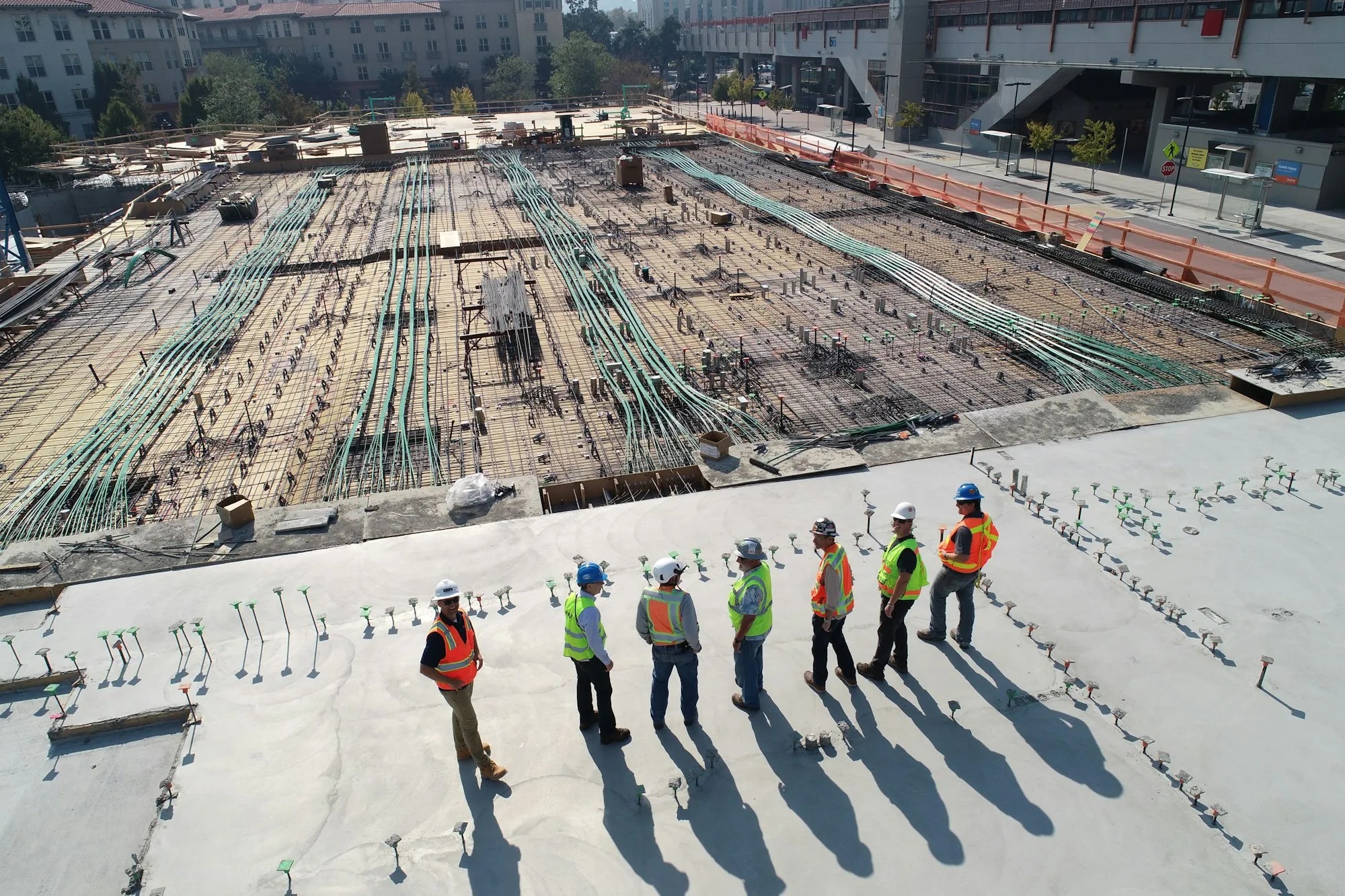
Think of the plywood hoarding around a live site. From the pavement, all anyone gets is noise and dust and a locked gate. They cannot see the steel going in straight, the joints done properly, the place swept at the end of the day. They just have to take it on faith that something good is happening behind the boards. A construction company website is the panel you cut into that hoarding - the viewing window that lets a stranger look in and see, for once, exactly what you build and how you leave it.
Make that literal and it is a portfolio of your own. Not a one-page holding site with a stock photo of a hard hat, and not a profile on a portal that sells the same enquiry to four of your competitors, but a place where a homeowner planning a renovation, a developer sizing up a partner, or an architect drawing a shortlist can see what you have actually finished, judge whether you are serious, and ask you for a quote in one tap. What follows sets out what that window has to show, what flips a curious visitor into a signed job, and why - across Switzerland and Italy - the firms taking the good contracts are the ones treating their website as a tool that wins work rather than a box somebody ticked once.
What your construction company website is really doing
Most construction firms build a website to list what they do. Foundations, extensions, roofing, full renovations, the lot. Fair enough, but that is the easy part, and it is also the part that convinces nobody. Every builder claims to do everything. The thing your website is really doing is answering one heavy, unspoken question that runs through the mind of anyone about to hand you a building:
If I give these people my money and my home for six months, will they actually finish, on budget, without disappearing?
That is a fear question, and construction is a fear purchase. Everybody has heard the horror story - the firm that took the deposit and vanished, the extension that ran a year late, the cowboys who left a roof open over winter. Your visitor is carrying that fear before they ever land on your page. The whole site is either quietly answering it or quietly confirming it. A site that loads fast, looks like a company that respects itself, and shows finished buildings photographed properly says “these people complete things.” A site with three blurry phone snaps, a broken contact form and a copyright date of 2018 says the opposite, and the visitor closes the tab and tries the next name.
This is the part that separates construction from a quick-decision trade. Nobody books a builder on impulse. The decision is slow, often shared between partners or a board, and it is deliberate - they will look at two or three of you, weigh it for weeks, ask around. Your website is the one stage of that comparison where you control the story instead of leaving it to a portal review and a friend’s vague recommendation. Clients choose a contractor, not a service. Make the site prove the contractor.
Why a portal listing and a Facebook page are not enough
We hear a version of this on nearly every first call: “We’re on the lead sites, and we’ve got a Facebook page - aren’t we covered?” It is a reasonable thing to think, and the answer is no, for reasons that have nothing to do with how hard you work and everything to do with what you own.
The lead portals - the MyHammer, Houzz, Habitissimo, ProntoPro type platforms, whichever ones are loud in your market - do one thing well: they put your name in front of someone who is shopping right now. The trouble is the model underneath. You are buying enquiries by the lead, the very same enquiry usually goes to three or four firms at once, so you are in a price race from the first phone call, and the client’s relationship is with the platform, not with you. It is a marketplace stall. You rent the footfall, you fight on price, and the day you stop paying you are gone. Worse, the jobs that come through that channel skew toward the cheapest end, because a client comparing four quotes side by side on a portal is, by design, shopping on price.
Then there is social. A Facebook or Instagram page is genuinely useful - a finished kitchen, a timelapse of a slab pour, a “another one handed over today” post all build a quiet sense that you are active and real. But you are building on borrowed ground. The algorithm decides who sees the post, it slides down the feed in a day, and no developer signs a half-million contract because a Reel did well. Treat social as the place that points people somewhere, not the place that closes them - and the somewhere it should point to is a site that belongs to you.
Of everything on that list, the website is the one thing you own outright. Its look, its wording, its loading speed, the searches it shows up for, where a submitted quote form lands - all of that is yours to dictate. It is open at eleven at night when a couple is finally sitting down to plan the extension they have argued about for a year. It is working while you are on site with no signal. And every visit, every project view, every quote request stays yours - no commission on the job, no middleman, no algorithm deciding your week.
What belongs on a construction company website
A construction site lives or dies on two things: proving you have done it before, and making it effortless to ask you to do it again. Everything else supports those two. What follows is each piece that earns its keep, taken roughly in the order a careful client works through them.
A project gallery that does the selling
This is the heart of the whole site, and it is where most builder websites fall down hardest. Your project gallery is your sales team. A homeowner deciding on a hundred-thousand renovation does not want a paragraph that says “quality workmanship” - they want to see the workmanship. Real photographs of real, completed builds, shown big, before-and-after where you have it.
A gallery that converts is not just a wall of pretty pictures, though. Each project should be its own page, and each page should carry the things a careful client and an architect actually look for:
- What it was - new build, extension, full gut renovation, roof, commercial fit-out.
- The scope and scale - square metres, number of units, structural work involved.
- How long it took, start to handover. Nothing reassures like a finished job delivered to a timeline.
- A short, plain account of any challenge solved - a tricky slope, a heritage facade, a tight urban access.
Photography matters more here than anywhere. Buyers and developers judge with their eyes first. A dozen sharp, well-lit shots of a finished facade and a clean interior do more for your credibility than every adjective on the homepage combined. If your work is at all visible to an international or architect-led clientele - and on the bigger jobs it usually is - clear, multilingual project descriptions stop being a nice-to-have.
Services pages that are specific, not a menu
Yes, list what you do. But “renovations” as a single word on a list helps nobody and ranks for nothing. A new-build page, a renovation page, a roofing or structural page, each written like a human explaining the process - what is involved, how you work, what the client can expect - does two jobs at once: it reassures the reader and it gives Google something real to rank. A visitor planning a loft conversion wants to land on a page about loft conversions, not a generic “our services” grid.
Certifications, licences and safety, made visible
In most trades this is fine print. In construction it is a trust pillar, and you should treat it like one. The licences you hold, the trade associations and chambers you belong to, your insurance and liability cover, your safety record and the standards you build to - put them where people can see them, not buried in a footer. A client about to commit a life-changing sum, and certainly any developer or public-sector buyer, is checking that you are properly registered, insured and compliant before they go further. Showing it plainly removes a reason to hesitate. Hiding it creates one.
Proof of scale and reliability
Around the gallery, a handful of things tip the decision: a real team or company page that shows there is an actual outfit behind the name - plant, people, a yard, years in business - rather than one man and a phone. Honest client testimonials, ideally tied to a named project. Concrete numbers beat soft claims every time: “over 60 projects delivered,” “in business since 1998,” “12 homes completed last year.” “We pride ourselves on quality” is noise. “We have handed over 14 extensions in the last two years, on average within a week of the agreed date” is a reason to call.
The request that pays the bills
Here is the part most construction sites treat as an afterthought, and it is the part that actually generates money. One action on the whole site turns a visitor into a job: the quote or site-visit request. A short form - what is the project, roughly when, where, leave your details - sitting on the homepage, on every service page, and at the bottom of every project in the gallery. The visitor has just looked at three of your finished builds; the moment to ask is right there, not three clicks away on a separate “contact” page. Every request should drop straight into your inbox the second it is sent. We will come back to this, because nothing else on the site matters as much.
Reading a list like this only takes you so far. It is easier to judge once you can click through the whole thing, so we built one and left it open: see the live demo. The firm in it is invented, but the moving parts are not - the gallery, the project pages, the services, the certifications and the quote request all behave exactly as they would on a paying client’s site.
Turning visitors into clients
Getting the pages right is half the battle, and only half. The gap between a site that looks tidy and a site that fills your pipeline comes down to a few unglamorous details, and in a slow, high-value trade like construction they matter more, not less.
The quote request is the one action that counts. Decide that the highest-value thing on your site is the quote or site-visit request, and then build everything to funnel toward it. Not five competing buttons - one obvious next step on every page. Keep the form short: a builder who makes a prospective client fill in fifteen fields before they can ask a question loses people who were ready to talk. Name, contact, a rough description of the job, ideally a way to attach a photo or a plan. Plainer language and fewer fields mean more completed requests, and on a single job worth tens of thousands, one extra completed request a month pays for the whole site many times over.
Speed and mobile, before anything else. A lot of your traffic is on a phone, often standing in the half-finished room they want changed. A site that takes four seconds to appear has already lost a share of those people before your first project photo loads. A quick site and a phone screen that actually works are not extras you add if there is budget; without them you never make the shortlist at all. It is also the quiet reason a heavy, plugin-stuffed website bleeds you work you never even hear about.
Photography is the credibility, so let it breathe. You can have flawless technology behind a set of dark, crooked snaps and it will not save you. Good photographs of finished work should be the loudest thing on the page, and the design’s only job is to stay out of their way. Pay for a half-day shoot of your strongest completed projects and give those frames the full width of the screen. In construction, the photo is the proof.
Answer speed wins the job. The website cannot reply for you, but it decides how fast you can. A quote request that reaches you instantly, that you respond to within the hour, beats one you get to in three days - because the client almost certainly asked two or three firms, and the first serious reply often wins the site visit. Wire the form so every request pings your phone the instant it is sent, and run that inbox the way you run the order book.
Trust signals right next to the form. A licence badge, an association logo, a real testimonial, a photo of an actual crew on an actual site - placed beside the quote form rather than hidden on an “about” page - measurably lifts how many people press send. People hand over their project details when it feels like they are contacting a real, accountable company, not posting into a void.
None of this is exotic. It is simply rarely done well in this trade, which is exactly why doing it well puts you ahead of most of the names a client is comparing you against.
Organic versus paid: where your money actually goes
At some point the practical question lands: once the site exists, who actually finds it? Two channels feed it, they keep wildly different timetables, and the firms that get this right lean on both - just not in the same proportion and not in the wrong sequence.
Organic traffic is what you earn from search and your own reputation: someone typing “renovation company” or “general contractor” with a place name, or searching your firm’s name directly after a referral. It is a slow burn. Fresh sites do not climb in a fortnight, and the project pages, service pages and reviews that drag you up the rankings need months to stack up. The payoff is that organic is the cheapest yard you will ever own in marketing - it keeps producing long after the work is done, the trust behind it is earned rather than bought, and nobody bills you per click. Put a year of steady organic effort behind a firm and it has an asset on the books. A fast, well-structured, genuinely local construction website is what makes that possible; it is the slab the rest of the marketing pours onto. And worth stating flatly: in this trade the referrer that matters most is usually a person, not an algorithm, and a clean site is the thing that converts that word-of-mouth tip into a signed job the moment the prospect goes looking.
Paid traffic flips every one of those traits: switched on in an afternoon, switched off the day you stop the budget. Google Ads can park you above “loft conversion” or “house renovation” plus a place name by this afternoon, and for a firm staring at a thin pipeline that is a genuine lever. Google’s Local Services and map listings reward real reviews and proper details, so claim those regardless. Houzz and the visual platforms have their place for design-led residential work where the client shops with their eyes. The catch is particular to building: clicks on high-value construction searches cost real money, and the lead portals that sell enquiries by the head tend to hand you the bargain-hunters. So spend on clicks with intent, drop them onto a fast site that proves you with finished projects, and steer them at the quote request rather than at a homepage that buries the form three scrolls down.
For most firms the order writes itself. The site comes first, because it is the landing strip for every paid click you ever buy, and a fast, convincing site is the difference between a costly click that becomes a quote request and one that bounces straight back out. With that in place, point sharp paid campaigns at the gaps in your pipeline while the organic side and the gallery thicken underneath. A year on, you can throttle the paid spend back as the organic base - and your widening set of real, photographed jobs - shoulders more of the weight. Paid covers this month. Organic covers every month after it. The goal is both, landing on a site that does your work justice.
Ready-made or built from scratch?
Granted that the site earns its keep, the one decision left is how you come by it - and for most construction firms the reflex to commission a bespoke build from nothing is the wrong starting point.
Go bespoke and you sign up for a job measured in months and billed in five figures, paying a developer to re-cut project galleries, service pages, certification blocks and quote forms that have already been cut thousands of times elsewhere. The risk sits on your side of the table, the deadline drifts - and of anyone, a builder knows in their bones how a drifting deadline feels - and when the dust settles you are left holding a codebase to host, secure and patch indefinitely, on top of actually running a building company. A handful of outfits genuinely need that: the very large contractors with requirements nobody has met before. The rest do not, and almost none of them want a second construction project grinding away behind the one that pays the bills.
The other path is a productised, ready-made site: a construction portfolio already built, tested and finished, that we then dress in your identity. Its bones are sound precisely because they have been sharpened across firm after firm in the trade. Live in days rather than months. One sensible setup fee, then a flat monthly charge folding in hosting, maintenance, security and small edits - and, unlike the lead platforms this trade keeps getting nudged toward, not a franc of commission and no charge per enquiry on the quotes it pulls in. Nothing about it is locked: your brand, your colours, your projects up front, with bespoke features bolted on later if you outgrow the base. You start ahead, and the starting point never becomes a wall.
That thinking is the whole reason for our ready-made construction company website - one of a whole line of ready-made websites for specific industries. You walk away with the portfolio a custom build would have produced, minus the months and the five-figure gamble, and you can be fielding quote and site-visit requests next week instead of next quarter.
Where to start
If only one thing survives this read, let it be the quote request and the gallery feeding it. Most construction firms pour their energy into a glossy homepage and an exhaustive list of services - the part that convinces nobody - while neglecting the two things that genuinely win contracts: photographed proof that you finish what you start, and a dead-simple way to ask you to start. Stand up a fast, trustworthy site, load your best completed projects, send any paid spend through a clean quote funnel, reply to every request inside the hour, and you have built a machine that wins work quietly while you are out on site doing the part you are actually good at.
Getting a site built at all used to be the obstacle. That is over. The portfolio is sitting ready, it works, and it can be carrying your brand and gathering your quote requests inside a week.
Frequently asked questions
- How much does a construction company website cost?
- A custom build runs into five figures and takes months. A ready-made, productised site like ours is a one-time setup plus a low all-inclusive monthly fee that covers hosting, maintenance, security and small changes - the current figure is on the solution page. There is no commission on the quotes or site visits the site brings you, which matters on a single job worth tens of thousands.
- I get all my work by referral. Do I really need a website?
- Referrals are how a builder survives; a website is how the referral closes. When someone passes your name along, the first thing the next client does is look you up. If they find a clear site with finished projects, licences and a quote form, the referral converts. If they find a dead Facebook page from 2019, it cools. The site does not replace word of mouth - it catches it.
- How long before it is online?
- A ready-made construction site goes live in a few working days. We set up your brand, colours and content, you load your best completed projects from a simple dashboard, and it is live. A bespoke project, by contrast, is usually a two to four month commitment before anyone outside your office sees a thing.
- Will it actually help me rank on Google?
- A fast, well-structured site with proper page titles, real project pages and genuine service content is the foundation of ranking for searches like new build or renovation contractor in your area. No site can promise the top spot, but the firms that appear are the ones with a technically sound site and pages that answer what clients and architects actually search for.
- Can clients request a quote or a site visit online?
- Yes, and that is the point of the whole site. A short request form sits on every key page and on each project, the client describes the job and leaves their details, and it arrives in your inbox the moment they hit send - no middleman, no fee per enquiry. That quote request is the single most valuable thing on the site.